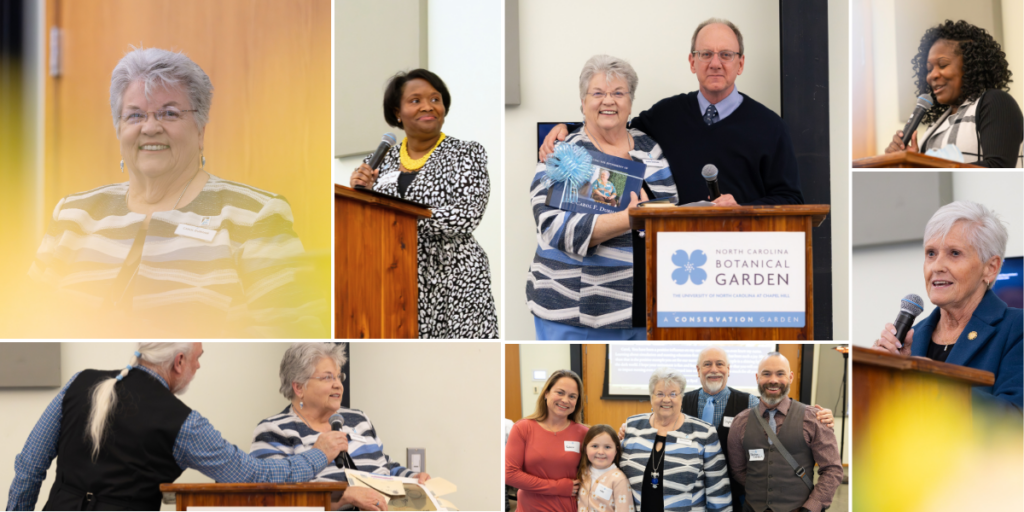
Leaving a legacy of excellence, Carol Durham retires after 45 years
February 3, 2026

Carol Durham came to UNC in 1980, “so I could become a Carolina nurse,” she said.
For 45 years, she has been just that, a Carolina nurse with an ethos and passion for service that’s as synonymous with Carolina as its iconic blue. And, at the close of last year, the innovative educator and clinician, generous mentor and changemaker whose vision has helped shape the School, retired.
Durham, EdD, RN, ANEF, FAAN, FSSH, was a Professor and Director of Education-Innovation-Simulation Learning Environment (EISLE), where students acquire, practice and gain confidence in vital patient care skills before entering clinical practice. Recognized worldwide for her legendary work in quality and patient safety, simulation and interprofessional education, as well as the enthusiasm with which she instills confidence and training in nursing students, Durham has improved the quality of the School and the nurses it produces at every step along the way.
“This has been the most amazing career, and it’s because I’ve had students who come in wanting to be a good nurse, and I’ve been alongside them helping them accomplish that,” said Durham. “It’s one of the biggest privileges you could ever have, to help someone know what to do, and then watch them go out and make a difference in someone’s life.”
“It’s one of the biggest privileges you could ever have, to help someone know what to do, and then watch them go out and make a difference in someone’s life.”
Durham was raised in the small Eastern North Carolina community of Rockfish, and when she applied to college, her mother suggested she put her hometown as the nearby Raeford, where she attended high school. Nobody knew where Rockfish was, she told her.
“I said somebody has to put it on the map,” says Durham. “It might as well be me.”
Durham’s father had died from scleroderma when she was just 13 years old, and the nurses at the VA hospital in Fayetteville treated him like family. “I thought, I want to do that for people. I want to make a difference in people’s lives. They were so caring and compassionate, just amazing nurses.”
She received her BSN at Western Carolina University and in 1980 enrolled at Carolina for her MSN where she started working in the skills lab — a move that would change her life and the course of the School. Investing in the skill acquisition of students became her passion, and over the next few decades, she would help advance the School’s curriculum with groundbreaking advances in simulation.
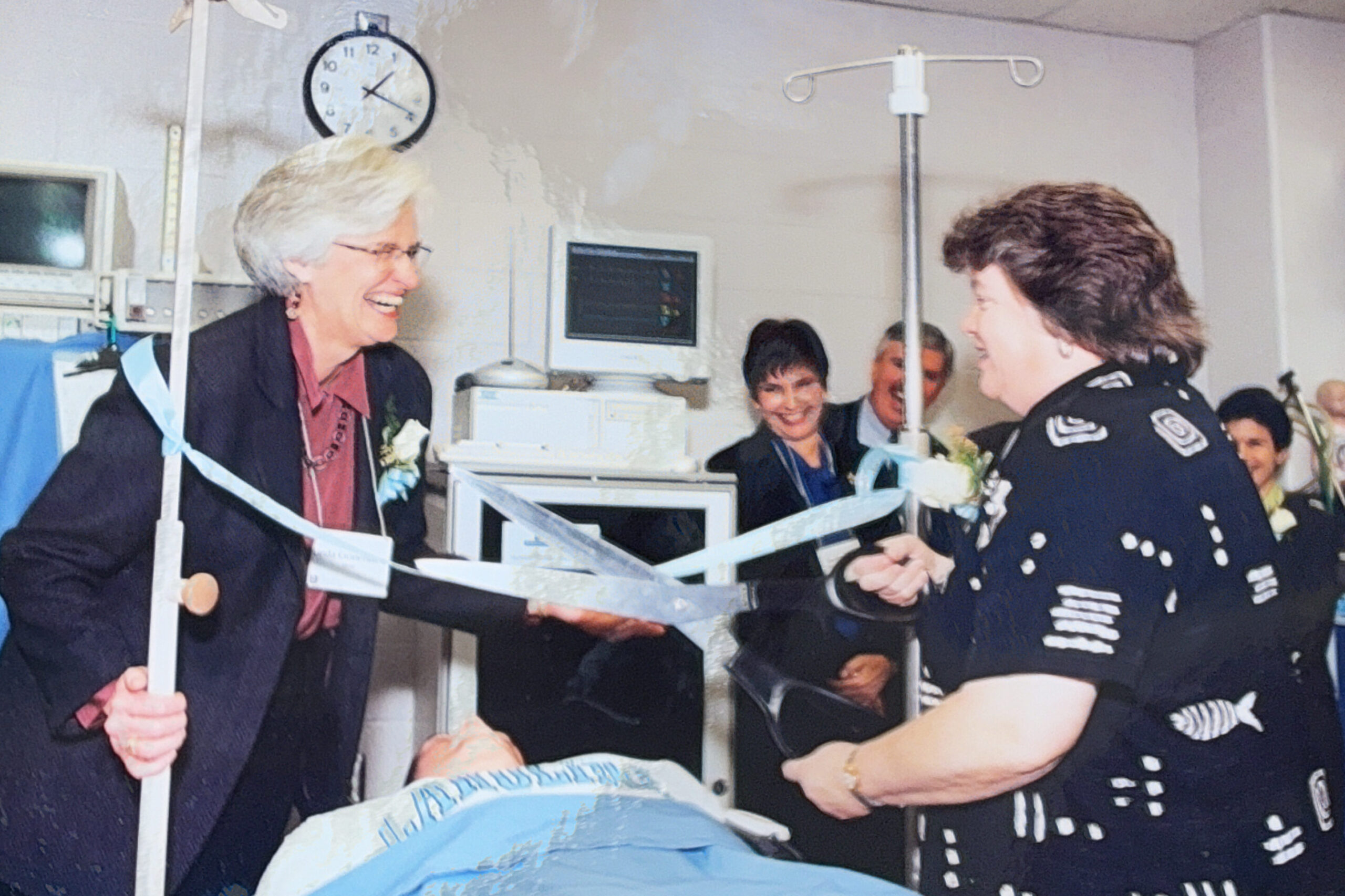
In 1988, she took over the skills lab, and in the 2000s convinced the School to invest in its first human patient simulator — a Standard Manikin called Stan the Man. The School was only the second in the nation to get one. Over the years, the School added to the family with pediatric, baby and birthing manikins.
Simulating a clinical experience that students can learn from takes an ever-evolving set of methodologies and tools, from practicing injections on a pad, to suctioning a tracheotomy on a manikin to applying skills safely amid interprofessional collaboration or a chaotic situation. How do you break down a skill, like taking blood pressure, in a way that it becomes woven into the fabric of their memory?
Moving someone from knowing to doing can make an immediate difference in the life of the patient, Durham said.
“At first, those skills are a bit fragmented in their heads, and we allow them to pull it together and apply it in different ways so they can actually go out and rescue patients right away as students or in their first job,” she said. “We’re accelerating their preparation for practice in a way that maybe others are not yet doing in the nation.”
In 2010, Durham became the patient in need of those quick, life-saving nursing skills. After becoming seriously ill in a faculty meeting and experiencing violent chills, she headed home to recover. But she soon recognized a troubling symptom the nurse in her knew she shouldn’t ignore.
“What I felt was an impending sense of doom,” she said. “It was like a cold wave washing over my back. I knew what it meant, because I taught it.”
An impending sense of doom can be one symptom of a life-threatening condition such as sepsis that can arise from an infection. Durham knew she had to get to the emergency room immediately. Upon arrival at UNC Hospitals, her blood pressure dropped, and she had no urinary output. Durham was in septic shock, and the nurses recognized it quickly. They put a sepsis protocol in place early, which protected Durham’s organs and kept her off vasopressors, which can come with their own damaging side effects. She was able to be released within a week.
“I always say that when I looked up and saw a Carolina nurse, I was relieved, because I knew how they were trained, and I’m confident in the way that we train. If you’re an educator, you need to be that confident in the training that you’re providing, right? Because we will be their patients someday.”
Durham has relayed her remarkable sepsis story in People magazine and at nursing conferences, and each year she repeats it for her students in the skills lab, hoping her story can save lives.
Braxton Nowell, BSN ‘22, RN, PCCN, a Clinical Nurse III in UNC’s Medicine Progressive Care Unit, remembers the first time he heard that story. And, he remembers the first time he used it. He’d been a nurse for two weeks when he recognized the warning signs of sepsis in a patient.
“I had a patient who was on antibiotics for a knee infection, and she started to get rigors, violent chills. At first, she didn’t have a fever, but I retook her temperature, and it was elevated, so I sent her out to the hospital. I learned she was just starting to develop sepsis and was on vasopressors for a very short period of time and discharged within two weeks,” he said. “It was from Dr. Durham’s story and the training I had that I was able to recognize sepsis and quickly provide the nursing care she needed.”
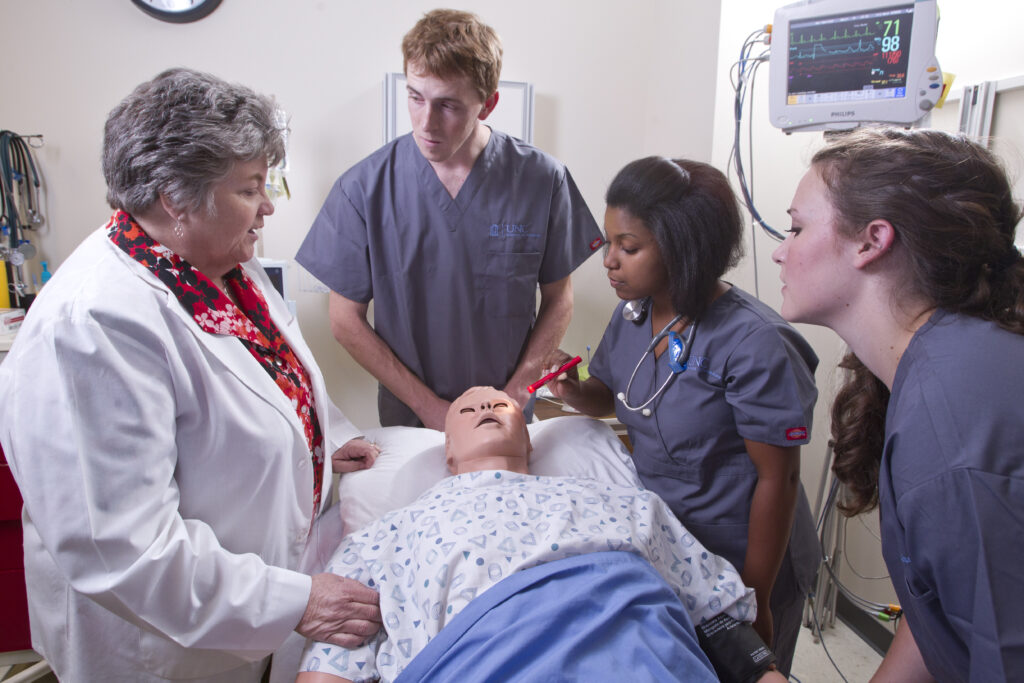
The passion with which Durham teaches skills leaves her voice in your head, said Meg Zomorodi, Ph.D., RN, ANEF, FAAN, Professor and Associate Provost for Interprofessional Health Initiatives at UNC. In her first nursing job after graduation in the Neuroscience Intensive Care Unit at UNC, she could almost hear Durham as she performed the right number of medication checks, mitered the corners of the bed sheets perfectly and meticulously washed her hands.
“Carol taught us that it’s the little things that maximize the outcome, and these things became central to my nursing core because she planted that seed in us when we were undergrads.”
Durham’s uncompromising standards of quality and safety set a standard, Zomorodi said, as did her drive for excellence. “She felt very strongly that in order to be the best nurse, you should not cut corners, you should not compromise evidence-based practice. She modeled and encouraged continual growth rather than just settle. That’s Carol’s mark. She kept pushing. She kept saying, ‘we can be better’.”
When Zomorodi returned to the School for her doctorate and joined the faculty, she and Durham worked together on the multi-year Robert Wood Johnson Foundation’s Quality and Safety Education for Nurses (QSEN) project initiated by then-Dean Linda Cronenwett. QSEN went on to become a nationwide initiative aimed at integrating quality and safety competencies into nursing education. The framework was ultimately incorporated into the 2021 American Association of Colleges of Nursing (AACN) Essentials, leaving Carolina Nursing’s fingerprints on the curricula of schools of nursing across the US and internationally.
Durham, who served as the simulation expert on QSEN, continued to be an inspiration and a treasured teammate for Zomorodi. Together they would be part of the effort to form the Office for Interprofessional Education and Practice (IPEP) at UNC to transform the way students across nine different professional schools at Carolina are trained for the workforce.
With Zomorodi leading the IPEP office for UNC, Durham became the inaugural director of IPEP for the School. And just as she once advocated for Stan the Man(ikin), Durham returned from a conference and pitched to Zomorodi the idea of a program centered around psychological safety and learning that would later become Relational Leadership™ @ Carolina (RL), a human-centered approach to working with others that cultivates connection and awareness in order to increase belonging, collaboration, and impact across systems.
“We have just had our 500th applicant to this program, and it was because of Carol’s passion that we now have RL here with its own legs and infrastructure,” she said. “This is Carol’s legacy — you don’t settle, you say, ‘This is the right thing to do. It may be hard to address it. It may be hard to fix it. It may be hard to change it. But because I’m a Carolina nurse, I feel empowered to try.’ I think that’s Carol’s North Star. It’s my North Star, too.”
“She is the textbook definition of a transformational leader,” said Darlene Baker, MSN, RN, CNE, CHSE, who recently retired as Assistant Director of EISLE and worked for Durham for 22 years as simulation grew and changed at the School under Durham’s leadership.
Baker was influenced by Durham’s spirit of collaboration and her ability to hold the highest standards for EISLE while nurturing staff and students as human beings. She said she led a constructive work environment with a give-and-take of ideas and a constant drive to make the right decisions to move EISLE forward each year.
Baker said she knew that Durham’s style had a profound impact on her when, after three years of working with Durham, Baker was deployed to Iraq with the Air Force and appointed Chief Nurse of her unit. Being in a war zone can be “make or break,” she said, but she found herself channeling Durham amid the most stressful situations.
“Every time I would have to discipline someone, or have a meeting about something difficult, my first thought before I walked in the meeting was, ‘What would Carol Durham do? What would she say to this person?’ She leads in such a team-friendly way. It helped me get through that experience, Carol in the back of my head.”
Durham said her life at the School revealed opportunities she didn’t know were even possible.
“It opened doors I didn’t know were there.”
She was able to receive her doctorate, play an integral role in meaningful change around interprofessional education at UNC, contribute to landmark safety initiatives like QSEN, usher in new degree programs at the School, work for decades of deans and help prepare too many Carolina nurses to count. She was inducted as a Fellow of the National League for Nursing Academy of Nursing Education in 2009, inducted as a Fellow of the American Academy of Nursing in 2013 and inducted as a Fellow of the Society for Simulation in Healthcare Academy in 2020. She was honored with the DAISY Lifetime Achievement Award in 2025.
Over four-and-a-half decades, one of her biggest contributions has been moving the School forward, in every way.
“The thing is, we have to keep innovating and staying ahead of the curve. We have to forecast: What will the new nurse in the next generation need? And how can we prepare them for that?” she said. “So that ability to be innovative and creative, and not to be constrained, that opportunity has been a real gift in my career.”
In retirement, Durham will be making more time for family and for her hobbies, things like Zentangle (meditative drawing), harmonica, wood carving and piano. She’ll even be acquiring some new skills of her own, such as learning disc golf with her son. She will continue to contribute to the profession as preferred opportunities emerge.
“I hope I learn something new on the last day that I live,” she said. “I have always loved learning, and I want to be open to new things. I’m curious. I want to know, and I want to instill that curiosity in students. I want them to always stay curious.”