

This excerpt is part of Carolina Nursing’s 75th Anniversary series, “From the Vault.” It was originally published as “Changing the Face of the School of Nursing” in the 50th Anniversary issue of Carolina Nursing, released in summer 2000.
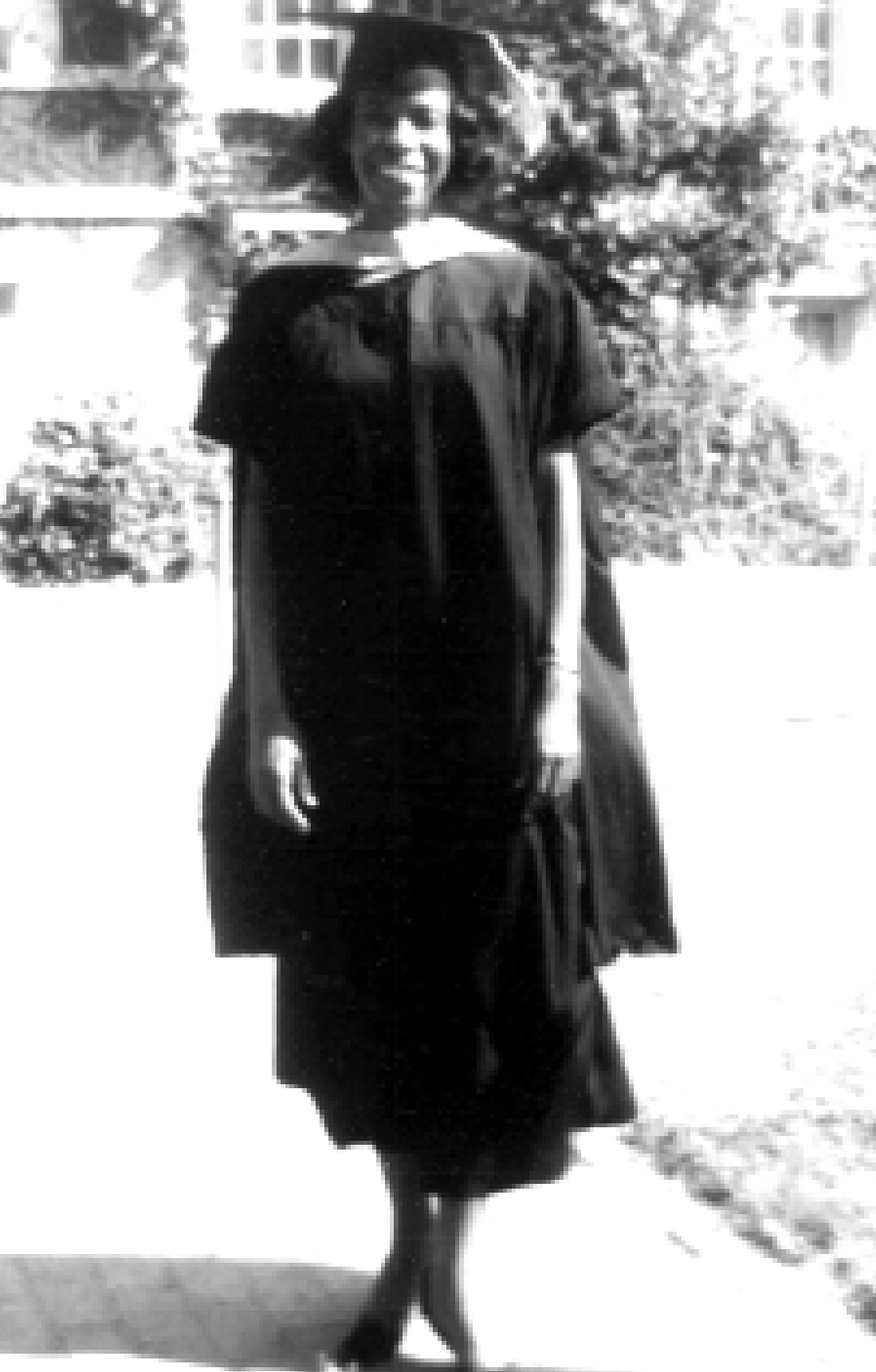
In a photo taken on the day she graduated from the School of Nursing, Ruth smiles proudly. She is standing still, but one foot is placed carefully in front of the other, as if she might step out of the photograph at any moment. The tassel on her mortarboard flutters—she’s about to take off.
Like her picture, movement characterizes Ruth’s distinguished nursing career. Receiving her MSN at the SON was one of many stops along the way. The Jacksonville, Florida native’s interest in nursing began just before she finished high school, when a special teacher wanted to make sure Ruth continued her education. “This teacher was a mentor to me without even really realizing it,” said Ruth. “She suggested that I go to Florida A&M University.” Ruth’s excellent grades convinced her teacher, Lucille Coleman, that Ruth would make an ideal nurse.
Ruth took Coleman’s advice, and in 1950 she enrolled at FAMU (which was then known as Florida Agricultural and Mechanical College), where she soon found another mentor in the dean of the nursing school. Elizabeth Carnegie’s talent for administration and the respect given to her by faculty impressed Ruth, who had a position in Carnegie’s office as a work-study student. Because of Dean Carnegie, Ruth decided that she wanted to teach.
After receiving her BSN in 1954, Ruth practiced for two years at Brewster Hospital in Jacksonville and then taught for six years in practical nursing and diploma programs. In 1957, she married Johnnie James Stephens. Soon after, she made the decision to return to school. “I was surrounded by role models who were black and who had made educational advancement, and I wanted to do so, too,” Ruth said. “And I wanted a school that was very good… I chose Chapel Hill.”
“I was surrounded by role models who were black and who had made educational advancement, and I wanted to do so, too. And I wanted a school that was very good… I chose Chapel Hill.”
Ruth’s family supported her decision. In 1962 she entrusted the care of her two little girls to her parents and husband and left Jacksonville, Florida to enter the master’s program in nursing education and administration at the SON. At a time in which the American South was struggling with issues of race and desegregation, Ruth left home, work, and family to come to a campus with few African American faces. However, her memories of the SON and UNC-Chapel Hill, though faded, are not what one might expect.
“I realized later that it was a turbulent time when racial problems were very prevalent,” Ruth said. “But I was insulated. What I remember most about Chapel Hill was my desire to do well because I had those children… and my mother, father and husband were back here [in Jacksonville] shouldering what I should have been doing.
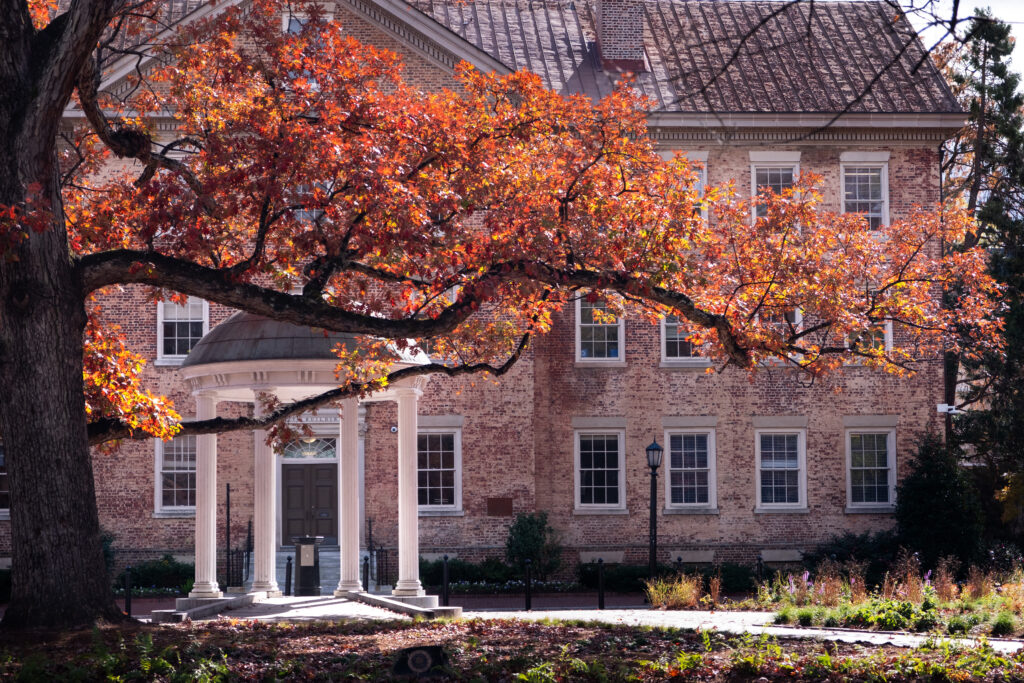
“I remember the Old Well. And I remember the colorful trees, and I would walk to classes during the change of seasons, and they were the most beautiful colors that I can remember… I remember having to eat in the cafeteria, and when I ate in the cafeteria, I mostly ate alone. But I was more an introvert than an extrovert—I don’t remember any person trying to be unkind to me for being an African American during that time.”
Ruth was involved, socially and academically, in the life of the School. “Dean Kemble and Eloise Lewis (a faculty member) invited the class to their homes for social activities,” said Ruth. “They tried to make us bond, you see. It worked!
“I also was inducted into Sigma Theta Tau, and that was quite an honor… quite a thrill to be invited. I was not as active as some were, but I don’t think I was isolated.”
After leaving the SON in 1965, Ruth returned to FAMU, where she served on the nursing school faculty until 1981. In 1976, she took a leave of absence in order to return again to school—this time to pursue her doctorate at Emory University.
Highlights of her career include serving as interim dean of the FAMU nursing school, serving as nursing department chair at Alcorn State University in Mississippi, and thirteen years as a faculty member, coordinator, and department chair at Florida Community College in Jacksonville, from which she retired in December 1999.
Although a self-described “retirement neophyte,” it isn’t hard to imagine that Ruth, now a widow and grandmother of four, will embrace this phase of her life with the same determination with which she reached out for her academic career.
Ruth has seen many changes within the profession. “In the 45 years I’ve been in nursing, I’ve taught in a practical nursing program, a diploma program, an associate program and a BSN program. The students have gotten older. For them, nursing is a second career. And they’ve come to nursing because they’ve always had the desire for it. The differences are that these students have more factors influencing them. There is more segregation in the profession, more responsibility and accountability. Also, legal issues are greater. It has definitely changed.”
Ruth acknowledges that one thing has remained the same. “It’s wonderful to know that the tradition of excellence continues at Chapel Hill.”
As we celebrate Black History Month, Ruth Anderson Stephens’ journey serves as a powerful reminder of the enduring impact of trailblazers who broke barriers and paved the way for future generations. Her legacy continues to inspire us, highlighting the importance of resilience, mentorship, and the pursuit of excellence in nursing.