UNC Oncology Nursing Fellowship program celebrates 10 years of improving cancer care
October 7, 2025
Before she was an oncology nurse, Madison McEvoy, BSN ’18, DNP ’23, had seen cancer up close. And she always knew she wanted to do something about it.
McEvoy’s father is a pediatric cancer survivor, and multiple family members were undergoing cancer treatment by the time she started school at UNC.
“This had always been part of my family’s story,” she said. “Cancer picked me before I even knew what to do with my life.”
And in the UNC Lineberger-Sylvia Lauterborn and Warren Trent Piver Oncology Nursing Fellowship program at the UNC School of Nursing, she found her calling.
“I wanted to take care of patients with cancer, and so I was excited after I got into nursing school to find that there were faculty who focused primarily on cancer, and they were offering a fellowship that allowed this really immersive experience in the specialty.”
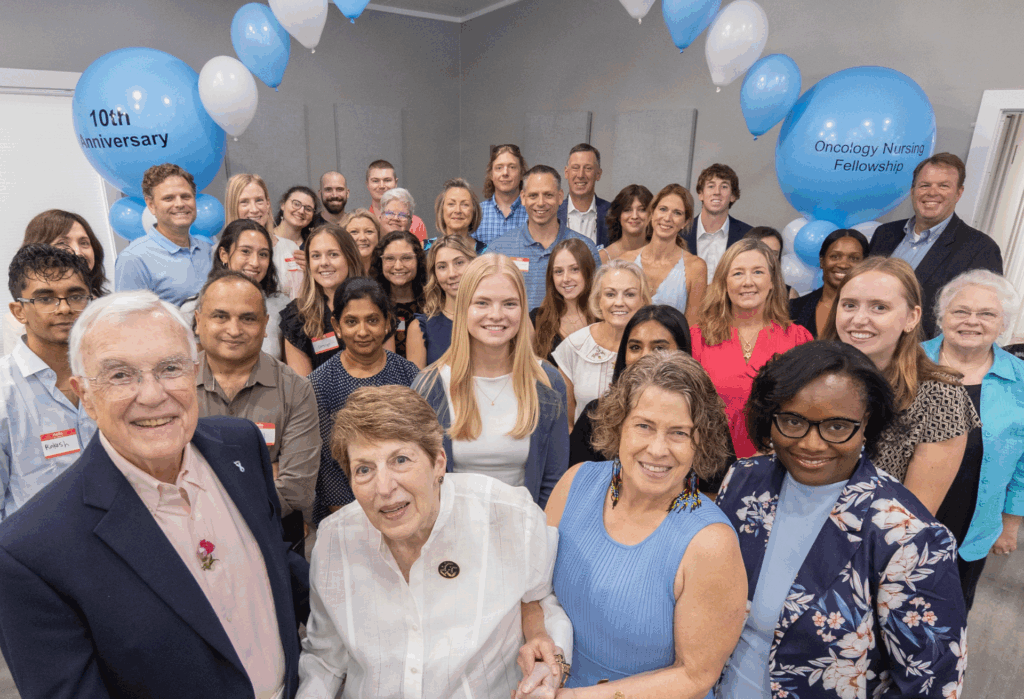
McEvoy, who is now a nurse manager at Duke University, was in the second cohort of the program, which celebrated its 10th anniversary in August. The program was designed to stimulate and foster professional development in oncology nursing at the school. The 10-week program includes both inpatient and outpatient experiences, working closely with oncology nurses to better understand the nurses’ role with symptom management, clinical trials and best practices in providing supportive care services.
With gifts from Bob Lauterborn and Laura Piver in honor of the excellent care their late spouses had received during cancer treatment, the fellowship was founded by Deborah Mayer, PhD, RN, AOCN, FAAN, an advanced practice oncology nurse and Francis Hill Fox Distinguished Professor Emeritus, and has since been led and nurtured by Ashley Leak Bryant, PhD, RN, OCN, FAAN, Frances Hill Fox Distinguished Term Professor at UNC School of Nursing and senior associate dean for strategy and global affairs, and Lorinda Coombs, PhD, MSN, FNP-BC, AOCNP, assistant professor at UNC School of Nursing.
With nearly 2 million new diagnoses in the U.S. each year, almost everyone has a connection to cancer: a loved one, a friend or a personal experience.
Almost 80% of all oncology care is delivered outside of the inpatient setting, Combs said. The state needs even more oncology nurses in the ambulatory setting and in infusion care. Oncology nurses deliver care across a spectrum, at the bedside as well as navigating patients, supporting care partners, providing resources for education and providing in survivorship care.
“In a lot of ways, the way that we’re doing this fellowship mimics how we deliver cancer care. It’s about having everybody together working, putting the patient at the center of the care. And that’s what we do here – we put the fellow at the center.”
Assistant Professor Lorinda Coombs
Bryant said the fellowship has grown through the years to reflect changes in curriculum and cancer care. The program has now trained more than 44 fellows and has expanded to include rural care at UNC Health Rockingham as well as fellows from North Carolina Central University in Durham and North Carolina A&T University in Greensboro. Prelicensure students can apply, and the main things that make a good oncology fellow are a clear and demonstrated interest in oncology, as well as empathy and compassion.
With cancer cases rising, it was important to the School that this program serves the state by making sure the oncology nursing workforce better reflects the demographics of North Carolina’s population, Bryant said.
It was important to Piver, too, who recently made a renewal gift to the program to “see it continue to grow,” she said.
“In (Warren’s) care, the oncology nurses were the bridge between us and the doctor. I’m pleased they’ve been able to expand the program to N.C. Central and A&T students to broaden that base to help provide nurses who look like the patients they serve and be a funnel into the state’s health care system.”
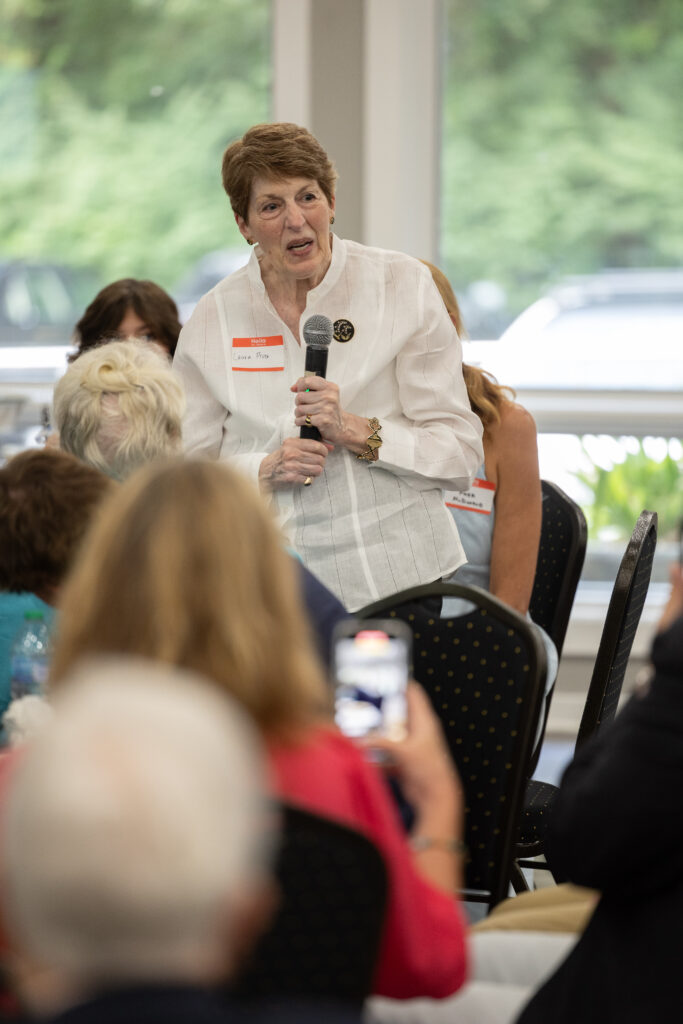
Combs said this is characteristic of Piver’s compassion and her desire to build connections for others through her contributions.
“Laura is a leader in her ability to imagine what life is like to be someone else, and because of her life experiences as a nurse, she thinks about the world and the future, what legacy she can leave. How can I make an impact for everyone and be a good citizen of the world and a good citizen of North Carolina? And I think her consideration is something we should all aspire to.”
When Piver initially sought to support the fund, she thought she didn’t know the Lauterborn family. But, then, she realized she and Syliva had crossed paths many times. At the Cotton Boll, which was once a fabric store in Chapel Hill, Syliva had helped Piver choose notions and fabrics for sewing.
“I realized how connected we all really are.”
Those connections are essential, said Bryant, and the program’s impact lies in the magnitude of the way it ripples through the state. The fellows have gone on to be leaders, getting additional degrees, working in clinical sites across the state and engaging with both rural and urban communities to expand cancer care. Many remain involved in the program, like McEvoy, who has served as a preceptor.
John Belcher, BSN ’21, an oncology nurse at the UNC Lineberger Cancer Center, had met oncology patients when he volunteered at the SECU Family House while getting his undergraduate degree in biology, and the person-focused nature of the work drew him to the nursing school. The fellows program is what solidified his future as an oncology nurse.
“Nursing is a great opportunity to work with patients and families and make a connection with them. Once I got in the fellows program, I just let the opportunity do the work.”
That opportunity was versatile, with experiences in chemotherapy, end-of-life care and emergencies. He liked the hands-on immersion in the care, but he also felt like the faculty working with him were as dedicated to his experience as he was to learning the skills.
“Dr. Bryant will come and talk to you, say, ‘Let’s talk about the oncology that you’re actually seeing, and how that application is very special.’ I felt like they were person-focused with me.”
Now, when he sees oncology nursing fellows on the floor, he’ll take the time to include them in his care.
“One of the things for me that’s so important is whenever I see another oncology fellow or a newer nurse, I kind of meet them where they are help them. Because nursing is a very hard job, and sometimes we need each other to get to where we you need to be.”
“In a lot of ways, the way that we’re doing this fellowship mimics how we deliver cancer care,” Combs said. “It’s about having everybody together working, putting the patient at the center of the care. And that’s what we do here – we put the fellow at the center.”