
October 15, 2026
The University of North Carolina at Chapel Hill School of Nursing has received $231,601 from the Health Resources and Services Administration through the Nurse Faculty Loan Program (NFLP) to support graduate students preparing for careers as nurse faculty.
The award will provide tuition assistance through loans to eight new students in the school’s Master of Science in Nursing, Doctor of Nursing Practice and Doctor of Philosophy in Nursing programs. The school will also support nine continuing students through disbursements from its existing revolving loan fund.
The NFLP allows graduates to have up to 85% of their program loans, including interest, canceled by completing up to four years of full-time employment as nurse faculty at an accredited nursing school after graduation.
Rebecca Hill, PhD, DNP, FNP-C, CNE, FAAN, senior associate dean for academic affairs and professor, serves as project director. Hill, a former recipient of NFLP support, oversees recruitment, advises students on program requirements and coordinates the school’s administration of the funding.
“Investing in nurse educators is one of the most powerful ways we can shape the future of nursing,” Hill said. “Every faculty member we prepare has the potential to influence generations of nurses and, through them, the health of countless patients and communities. Having personally benefited from the Nurse Faculty Loan Program, I know the doors this opportunity can open. At Carolina, we are building on that investment by preparing graduate students not simply to enter academic nursing, but to lead, innovate and advance the profession through excellence in nursing education.”
“Every faculty member we prepare has the potential to influence generations of nurses and, through them, the health of countless patients and communities.” — Rebecca Hill, senior associate dean for academic affairs and professor
The funding supports the school’s efforts to address nursing workforce shortages by preparing educators who can teach future nurses. Faculty shortages limit the number of students nursing schools can admit, affecting the supply of nurses entering the workforce.
“To educate more nurses, we need more nurse faculty,” said Valerie Howard, EdD, MSN, RN, CNE, ANEF, FAAN, dean of the UNC School of Nursing. “This funding helps our graduate students prepare for teaching careers while reducing the debt they carry into those roles. Supporting future educators is one way we can expand nursing education and meet North Carolina’s need for nurses.”
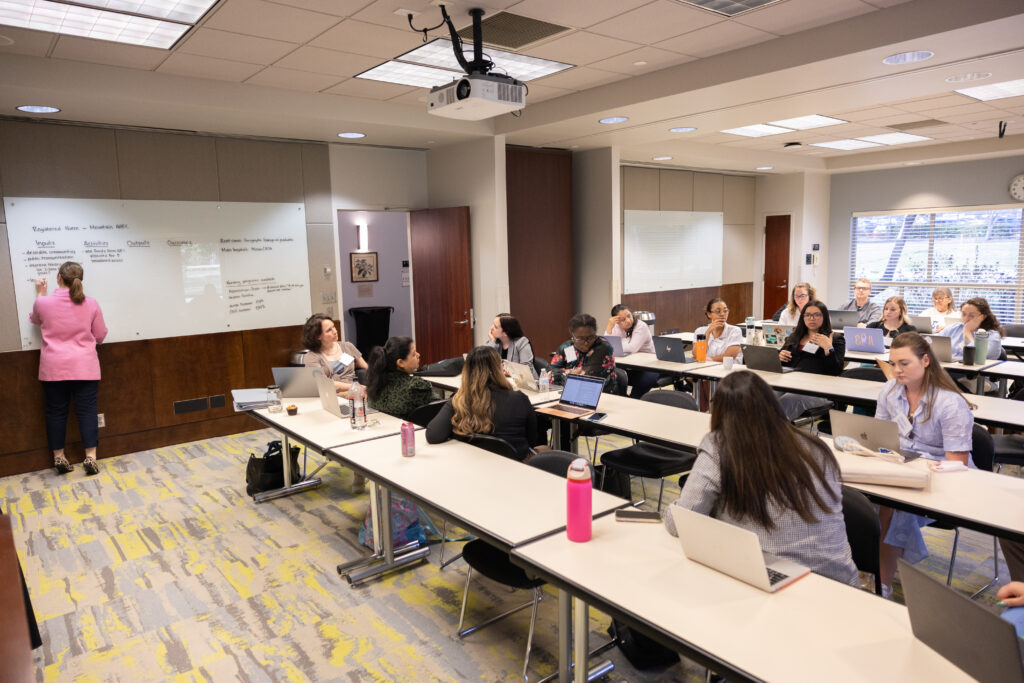
Recipients will complete nursing education coursework through the school’s Graduate Certificate in Nursing Education alongside their graduate studies. The coursework prepares students to develop curricula, teach in classroom and clinical settings, and evaluate student learning. Students may also gain experience through mentored teaching opportunities.
The school’s plan includes faculty career seminars, mentoring, networking and job-search support to help recipients move from graduate study into teaching positions. An annual workshop brings together new and continuing recipients and recent graduates to discuss faculty careers, identify mentors and share advice about securing teaching positions.
“Our MSN and DNP students bring clinical experience that will inform their teaching,” said Carrie Palmer, DNP, RN, ANP-BC, assistant dean for MSN/DNP programs. “Graduate study builds on that experience, while nursing education coursework and mentored teaching help them learn to design courses, guide students in clinical settings and evaluate learning. Together, those experiences prepare them to teach the next generation of nurses.”
The program also supports PhD students preparing for faculty roles that combine research and teaching.
“PhD students prepare to develop nursing knowledge through research and to help students apply that knowledge in practice,” said Jessica Williams, assistant dean for the PhD program. “This funding supports their graduate education while teaching coursework and mentoring help them prepare for the responsibilities of a faculty role.”
The school works with UNC’s Office of Scholarships and Student Aid and University Cashier’s Office to administer loans, monitor eligibility and manage repayment and cancellation. Repayments of principal and interest return to the revolving loan fund to support future borrowers.
The School of Nursing received its first Nurse Faculty Loan Program award in the 2003-04 academic year and has maintained a dedicated, interest-bearing program loan fund since 2003.


News
UNC School of Nursing secures funding to support future nurse educators

News
UNC School of Nursing report identifies six priorities for nursing workforce retention

News
Leslie Davis becomes first nurse to lead development of ACC clinical guidance

News