Commencement spotlight — Leslie Morales
May 4, 2026
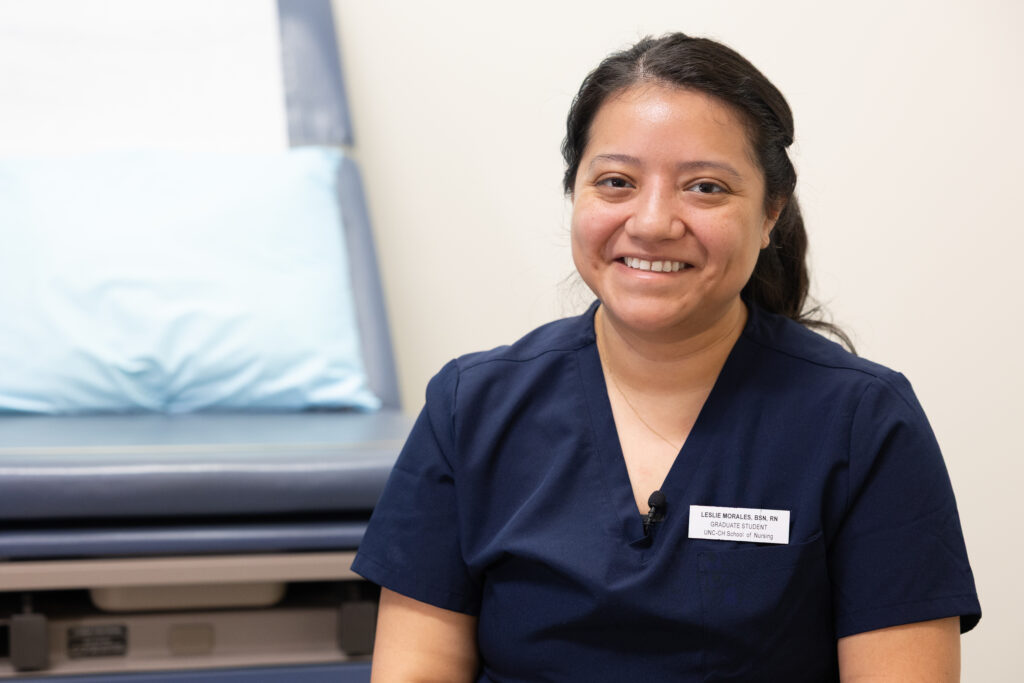
When Leslie Morales BSN ’18, DNP ’26, was growing up in Siler City, NC, she often served as the interpreter for her family. As a young girl, she moved between English and Spanish, trying to interpret between her mother and health care providers— and often anyone else who needed her.
She saw firsthand how difficult it was for the people in her community to convey their healthcare needs, especially her mother, who experienced chronic pain from working at the town’s chicken plant.
“As a future bilingual healthcare provider, I hoped to remove that responsibility from other children, and I am relieved my own children won’t have to do the same,” Morales says. “I felt like I had to grow up fast to help my family.”
“Thankfully, it was a good thing my mother insisted I keep up with my Spanish,” says Morales, who will graduate from the UNC School of Nursing on May 8, 2026, with her Doctor of Nursing Practice (DNP) degree in the Family Nurse Practitioner (FNP) track, ready to serve families like her own and remove barriers to healthcare that thoughtfully considers culture and meets the patient where they are.
Driven by a commitment to community-centered service, she completed her DNP capstone project, titled “Program Evaluation of Referral and Service Delivery of Medical Nutrition Therapy (MNT) Services at Siler City Piedmont Health,” at a federally qualified health center in her hometown.
“Being able to connect with patients in my own community is what motivated me to complete my project at this clinic in my hometown. Growing up in a small rural, but growing, town, I’ve seen the gaps in care, and I want to make a difference for those who are underserved or struggle to have their healthcare needs heard.”
Her project was a program evaluation aimed at improving outcomes for individuals with Type 2 diabetes, particularly among underserved populations disproportionately affected by the condition. She observed that diabetes is highly prevalent within the clinic’s Latinx population, and that developing nutrition recommendations that are both effective and culturally appropriate can be challenging.
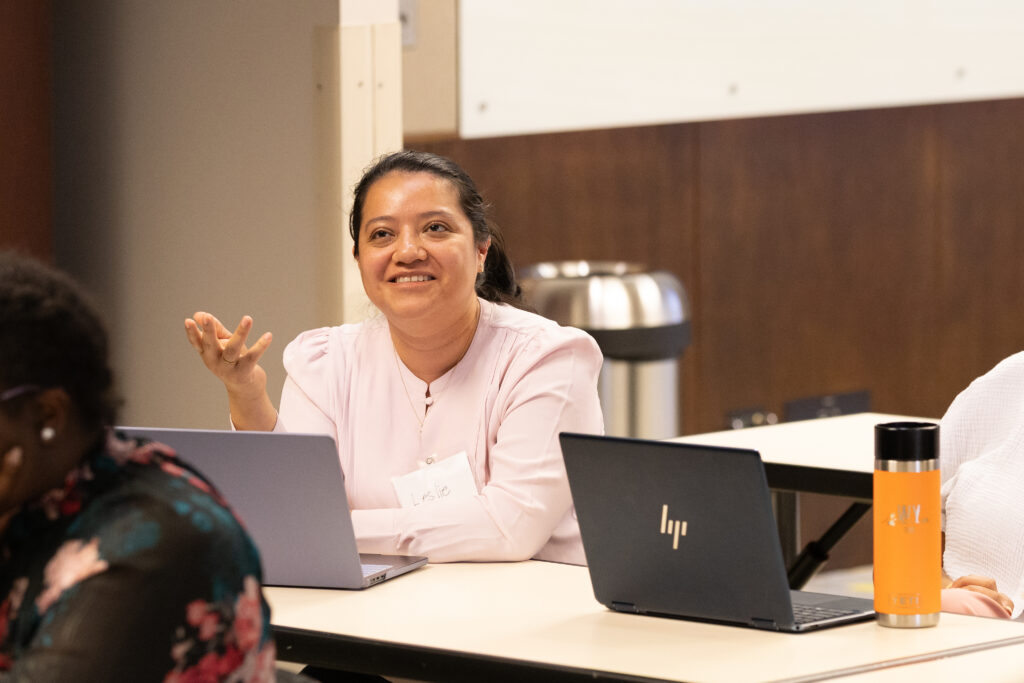
Morales was inspired by her childhood pediatrician to pursue medicine during her undergraduate studies at Carolina, as she’d loved how he whispered a song into her ears when she was a child. But she found her passion in nursing, where she could have more meaningful interaction and involvement with patients, while also completing a bachelor’s degree in psychology at the same time. Since graduating with her BSN, she has worked as a registered nurse in a stepdown surgery and trauma unit at Duke University Hospital.
At Carolina, Morales has worked with UNC School of Nursing Mobile Health Clinic, serving Spanish-speaking and underserved populations through vaccine clinics, free health screenings and outreach efforts aimed at improving access to care. She also serves as a board member for El Vínculo Hispano, an organization that addresses the unique needs of a growing Latinx community in North Carolina. During her program, she also balanced the demands of a growing family, raising two small children while also supporting her husband through a serious accident. Despite these challenges, he continued to encourage her, reminding her, “You’re going to be Dr. Morales.”
She says the supportive environment of the nursing school was crucial to making it work.
“Everyone in the program, all the professors, my advisors, and my classmates, were very understanding and encouraging,” she says. “I made a very cool group of friends who I’m very close with — I never felt alone.”
Morales received a scholarship through the HRSA Nurse Corps, which improves the health of underserved and vulnerable populations by strengthening the health workforce and connecting skilled professionals to communities in need.
“I went into this knowing I wanted to make a difference in underserved communities, especially within the Latinx population. Being bilingual and part of a scholarship that supports work in underserved areas has really reinforced that goal,” she says. “Understanding a patient’s language and culture improves care for both patients and providers. Communication is key to helping people.”
Through her clinical rotations, she has found her way back to pediatrics, coming full circle from the inspiration that first led her into healthcare, and she hopes to build a career caring for children and families in underserved communities.


