
Publication and presentation roundup — Spring 2026
The latest scholarly work from the UNC School of Nursing
Carolina Nursing faculty, staff, and students are actively sharing their research findings on critical health care topics through publications in academic journals, presentations at national and international conferences, and features in various media outlets, including articles, podcasts, and more.
Take a look at the selection of publications, presentations, and media features below to learn more about how Carolina Nursing experts are advancing health for all by addressing the greatest health care challenges of our time.
Please note that the following list was compiled based on information submitted by our researchers and is categorized into presentations and publications.
Have a publication, presentation, or media feature to share to share? School of Nursing faculty, students and staff can submit information here to be included in the next roundup.
Publications
Natasha Burse, DrPH, MS, and colleagues recently published an article examining how community-based storytelling can address health inequities among adolescent and young adult (AYA) cancer survivors, particularly those from underrepresented communities.
The article highlights the development of One Herd, a digital storytelling and health equity campaign launched by the nonprofit Elephants and Tea. Guided by a multidisciplinary advisory team of AYA survivors, the campaign used a national needs assessment to identify barriers to equitable survivorship care, including limited access to fertility preservation resources, experiences of bias in health care, and unmet needs for peer connection and identity-affirming support. These findings informed the creation of survivor-centered content shared through digital platforms, print publications, webinars, and live storytelling events.
Early feedback identified personal survivor stories as the most impactful component, reinforcing the value of lived experience in shaping both community support and provider education.
Maureen Baker, PhD, CNL, CHSE, Rebecca Kitzmiller, PhD, MHR, RN, NI-BC, and Joseph M. Biddix, DNP, RN, CNOR, recently published a quality improvement project focused on reducing inadvertent perioperative hypothermia (IPH) in surgical patients.
Using the Johns Hopkins Model for Evidence-Based Practice as a guide, an interdisciplinary team implemented a prewarming protocol in a remote military treatment facility. Patients were prewarmed for 30 minutes prior to surgery using forced-air warming devices, with outcomes compared before and during implementation. The team tracked protocol adherence, patient temperature trends, and any unintended impacts such as delays or added costs.
Prewarming was associated with a 42.8% reduction in IPH. Patients who were prewarmed arrived in the postanesthesia care unit with higher body temperatures and, if hypothermia occurred, returned to normal temperature more quickly than those who were not prewarmed.
Jennifer Leeman, DrPH, MPH, MDiV, Moriah Fender, RN, BSN, Cameron Ulmer, RN, BSN, Mark Toles, PhD, RN, FAAN, and colleagues recently published a qualitative study examining how dementia caregiving specialists support caregivers in navigating the challenges of dementia care.
The study draws on interviews with caregiving specialists across 11 states to better understand how they help caregivers adapt over time. Findings show that support spans one-on-one consultations, group settings, and broader community education and advocacy efforts. Specialists often provide guidance during key transition points in care, offering practical strategies to help caregivers manage evolving needs.
Six core strategies emerged, including identifying immediate challenges, testing adaptive solutions, and sustaining those solutions over time. These approaches highlight how caregivers build confidence and skills through ongoing support rather than one-time interventions.
Analysis of Stepped-Wedge Cluster Randomized Trials: A Tutorial Using Marginal Models
Mark Toles, PhD, RN, FAAN, and colleagues recently published a tutorial focused on improving how researchers analyze stepped-wedge cluster randomized trials (SW-CRTs), a study design commonly used to evaluate interventions over time across groups.
The article explains how marginal models can be used to better estimate the impact of interventions while accounting for patterns within groups, such as how outcomes may change or become less similar over time. It also highlights recent methodological advances, including more flexible ways to model within-group correlations and improved statistical techniques—such as generalized estimating equations and matrix-adjusted estimating equations—that allow researchers to more accurately interpret results, even in studies with smaller sample sizes.
By walking through practical examples, the tutorial provides guidance for applying these methods across a range of study designs, including repeated cross-sectional and multi-period trials.
Alasia Ledford, PhD, Harry Adynski, PhD, RN, PMH-BC, Linda Beeber, PhD, PMHCNS-BC, FAAN, Jada Brooks, PhD, MSPH, RN, FAAN, Anna Matthews, PhD, and Jennifer Leeman, DrPH, MPH, MDiV, recently published a systematic review examining how mental health interventions are delivered through perinatal home visiting programs.
The review analyzed studies published between 2010 and 2024 to assess the effectiveness and implementation of home-based mental health interventions for individuals at risk of adverse perinatal mental health outcomes. Across 25 articles representing 12 distinct interventions, approaches included cognitive behavioral therapy, motivational interviewing, and collaborative problem solving, delivered by a range of providers from community health workers to licensed clinicians.
Findings showed consistent evidence that these interventions can reduce symptoms of depression, with more limited evidence for reducing anxiety. The review also identified gaps in how implementation strategies and outcomes are reported, along with underrepresentation of certain high-risk populations in existing research.
Exploring the needs of Galápagos youth using photovoice
Natalia Villegas Rodriguez, PhD, MSN, RN, IBCLC, FAAN, and colleagues recently published a study exploring the experiences and needs of youth living in the Galápagos Islands.
Using a participatory research method known as photovoice, the study engaged adolescents in San Cristóbal to document and reflect on their daily lives through photography and group discussion. Participants identified key challenges related to recreation, education, and both physical and mental health, while also highlighting opportunities for improvement within their communities.
The findings show that youth are actively reflecting on their environments and identifying ways to create change, including through advocacy, community action, and engagement with local institutions.
Learning to Care, Learning to Connect: Teaching Relationship-Centered Care to Nursing Students
Cara Winstead, RN, MPH, COHN-S, recently published an article exploring the integration of relationship-centered care into public health clinical nursing education through community-based experiences with individuals with intellectual and developmental disabilities (IDD).
In the article, Winstead discusses how working with individuals with IDD in supportive environments helps students develop empathy, communication skills, and cultural competence, preparing them for diverse clinical settings. She highlights how this public health clinical experience addresses health inequities faced by individuals with IDD by promoting social inclusion and reducing loneliness—factors linked to improved health outcomes.
Dr. Eric Hodges said, “Cara Winstead’s work with Reality Ministries and the nursing students who spend time there represents a wonderful example of a fundamental role nurses can play in the lives of their patients. Taking time to be present and establish a connection is essential to caring. I’m sure that this experience is transformative and translates across the students’ professional and personal lives.”
Scaling such programs across nursing schools enhances students’ ability to provide inclusive, person-centered care, strengthen workforce readiness, advance health equity, and foster community partnerships that prioritize belonging and holistic care.
Kea Turner, PhD, Olivia Sprow, MPH, Emma Hume, MPH, and colleagues recently published a study protocol focused on improving nutrition care after pancreatic cancer surgery.
The study introduces the STRONG programme, which aims to address gaps in access to nutrition counseling after hospital discharge. The program includes standardized nutrition guidance, patient-reported data collection, educational materials, and tools to support communication between patients and dietitians. A pilot randomized controlled trial will evaluate the feasibility and acceptability of the program compared to usual care in patients recovering from pancreatic surgery.
This work aims to improve delivery of nutrition support in oncology care and inform future studies on effective, patient-centered nutrition interventions.
Isabel Roth, DrPH, MS, Cammie Moore Presler, DNP, CPNP, CPON, and colleagues recently published a study examining caregiver awareness, interest, and use of complementary medicine (CM) among pediatric hematology and oncology patients.
While only 30% of caregivers were familiar with CM terminology, more than half reported using at least one form, most commonly dietary changes and mind-body practices. Caregivers of children with cancer often used CM to manage treatment side effects, while those with nonmalignant conditions focused on long-term quality of life. Barriers included lack of awareness and cost, and few caregivers reported discussing CM with clinicians, with most conversations initiated by families.
The findings highlight gaps in awareness, access, and communication, pointing to a need for better education and more accessible integrative care options for pediatric patients and their families.
Brent Small, PhD, and colleagues recently published a study examining cancer-related cognitive problems and their impact on patients prior to treatment.
The study highlights that cognitive difficulties are common and can negatively affect quality of life and daily functioning. While often linked to treatments like chemotherapy, up to one-third of patients experience cognitive problems before starting systemic therapy. This is especially important in breast cancer, where the median age at diagnosis is 65—an age when cognitive changes are already emerging—and the number of older patients is expected to rise significantly.
These findings underscore the importance of recognizing and addressing cognitive concerns early, even before cancer treatment begins.
Jada Brooks, PhD, MSPH, RN, FAAN, and colleagues recently published a study examining differences in ambient air pollution exposure among American Indian communities across the United States.
Using data from the Strong Heart Study and modeled PM2.5 data, the researchers estimated short-term and annual exposure levels across regions. Participants in the Southwest and Southern Plains experienced higher PM2.5 concentrations than those in the Northern Plains. Exposure levels also varied within and across regions, with seasonal patterns differing by location—higher levels in summer in the Northern Plains, while remaining more consistent year-round in other regions.
These findings provide important baseline data to support more accurate and equitable air pollution exposure assessment in American Indian communities.
Eric Hodges, PhD, FNP-BC, FAAN, and colleagues published a qualitative study exploring how Child Health Service (CHS) nurses experience supporting parents with overweight during clinical encounters about their child’s overweight.
CHS nurses described feeling uncertainty in their professional role while addressing a sensitive topic. They focused on weight-related aspects of the child’s health and lifestyle, though parents’ emotions and socioeconomic challenges were sometimes overlooked. Parental overweight could influence nurses’ perceptions, leading to assumptions about parents’ ability to support their child. When a child’s weight did not change, some nurses reported frustration, at times emphasizing parental responsibility or using more directive approaches.
The findings highlight the challenges nurses face in balancing professional responsibility with a supportive and caring approach, especially when weight stigma may influence interactions.
Ryan Chi-Hsuan Su, Emma Hume, MPH, Olivia Sprow, MPH, Kea Turner, PhD, and Brent Small, PhD, and colleagues published a qualitative study examining colorectal cancer survivors’ and caregivers’ experiences with managing nutrition after cytoreductive surgery plus heated intraperitoneal chemotherapy (CRS-HIPEC) in the Journal of the Academy of Nutrition and Dietetics.
Four key themes were observed: 1) Nutrition-impact symptoms, such as diarrhea, early satiety, and pain, were more severe and lasted longer after the CRS-HIPEC procedure than anticipated; 2) After the procedure, survivors had difficulty purchasing, preparing, and eating food, which led to anxiety and frustration; 3) Caregivers struggled to implement nutrition guidance from the care team and expressed a desire for more tailored resources, such as recipes and meal plans tailored based on the surgical procedure (e.g., presence of colostomy); and 4) The timing and continuity of registered dietitian nutritionist support affected readiness for self-managing nutrition after the procedure.
Early and proactive registered dietitian nutritionist support may help colorectal cancer survivors and caregivers cope with nutrition challenges after CRS-HIPEC. Future interventions are needed to test early and proactive delivery of nutrition counseling and tailored nutrition education based on the surgical procedure (e.g., colostomy).
A Fall Prevention Program Evaluation in a Neuroscience Intensive Care Unit
Amanda Davidson, DNP, AGACNP-BC, Rebecca Kitzmiller, PhD, MHR, RN, NI-BC, Carrie Palmer, DNP, RN, ANP-BC, CDE, and colleagues evaluated a fall prevention program in a 37-bed Neuroscience Intensive Care Unit (ICU) at a large academic medical center, where fall rates had increased despite an existing evidence-based protocol. Using the Context, Input, Process, Product (CIPP) evaluation framework, the team conducted both quantitative and qualitative analyses—including over 800 point-prevalence audits, staff surveys, and a focus group—to assess program effectiveness and identify gaps in knowledge, resources, and implementation processes. Their evaluation revealed opportunities to strengthen staff understanding of fall prevention strategies, address perceived barriers, and improve adherence to existing procedures.
Findings highlighted the need for enhanced education, better performance feedback, and greater multidisciplinary engagement in fall prevention efforts. Based on these insights, the authors recommended several improvements: increasing the rigor and frequency of audits, delivering direct performance feedback to clinical staff, supporting falls prevention with additional resources such as sitters or remote monitoring, bolstering academic detailing, and providing written materials for staff, patients, and families. These recommendations aim to refine fall prevention practices in critical care settings and ultimately enhance patient safety and outcomes.
Impact of Quality of Life on Work Productivity Among Adolescent and Young Adult Cancer Survivors
Brent Small, PhD, and colleagues examined the impact of cancer on work productivity among persons who were diagnosed as adolescents and young adults (AYA; 18 and 39 years of age), as compared to persons without a cancer history. The results showed that cancer survivors reported missing more hours of work and rated their health as negatively impacting work productivity, especially among cancer survivors who reported poorer cognitive functioning. As the AYA cancer population grows, interventions to facilitate return to employment will be a critical need.
Professional Nursing: Concepts & Challenges, 11th Edition
Beth Black, PhD, RN, FAAN, and Maureen Baker, PhD, CNL, CHSE, have published the 11th edition of Professional Nursing: Concepts & Challenges, a foundational text that continues to shape how nursing students enter and understand the profession.
Published by Elsevier, the latest edition provides a comprehensive framework for launching professional practice, guiding students through the history of nursing, contemporary evidence, ethical foundations, and the future directions of the discipline. The text challenges students to think critically about their evolving role in healthcare while grounding their development in scholarship and professional standards.
The 11th edition also highlights the contributions of many members of the Carolina community. Featured voices include Dr. Nancy Jo Thompson; alumni Danielle White, Joseph Jones, and Danyal Asar; as well as Dr. Joseph Biddix, Dr. Kandyce Brennan, Dr. Megan Williams, Dr. Linda Cronenwett, and Dr. Cheryl Giscombe. Their perspectives and scholarship enrich the text and reflect the strength and influence of Carolina nursing.
Through this updated edition, Drs. Black and Baker continue to prepare the next generation of nurses to enter practice with a strong professional identity, a commitment to evidence-based care, and a clear understanding of nursing’s impact on health systems and society.
What I Wish I Knew: The Reality of Heart Transplant Recipients
When senior Sara Mack, RN, approached Maureen Baker, PhD, CNL, CHSE, about pursuing an honors project, it was clear this one was different. Sara shared that her mother had received a heart transplant — a clinical success — yet her family felt unprepared for the emotional and practical challenges that followed in the post-transplant period. Determined to make a difference, Sara set out to create the resource she wished her own family had during that time.
Today, Sara has published her qualitative research study and accompanying electronic resource in the Journal of Clinical Transplantation, extending her impact well beyond Carolina. Her work translates the lived experiences of heart transplant recipients into a meaningful, patient-centered guide designed to better prepare individuals and families for the recovery journey.
The resource is already resonating with those it aims to serve. Carson Reed, a freshman in Dr. Baker’s N89 seminar, Navigating and Advocating for Your Wellness, and a 2025 heart transplant recipient, reviewed the guide and shared, “You nailed what I went through. This captures what others do not understand about the transplant journey.”
Through scholarship rooted in empathy and patient engagement, Sara’s honors project has grown into a nationally disseminated contribution — transforming personal experience into meaningful change for patients and families navigating the transplant journey.
Drs Lorinda A. Coombs, PhD, MSN, FNP-BC, AOCNP and Ashley Leak Bryant, PhD, RN, OCN, FAAN, published an invited editorial commentary in the January 2026 issue of Annals of Palliative Medicine.
The commentary responds to a multisite randomized trial published in the Journal of Clinical Oncology that examined inpatient palliative care for patients undergoing hematopoietic stem cell transplantation. The original study demonstrated that early, structured inpatient palliative care significantly improved patient quality of life and reduced symptoms of depression and post-traumatic stress disorder following transplantation.
In their commentary, Coombs and Bryant discuss the implications of integrating palliative care early in high-intensity cancer treatments. They highlight the role of proactive symptom management, psychosocial support and consistent communication in improving patient outcomes and long-term psychological recovery. They conclude that palliative care should be considered a core component of transplant treatment rather than a service reserved for end-of-life care.
Matthew LeBlanc, PhD, RN and his team describe treatment initiation among newly diagnosed multiple myeloma patients over time (2007 – 2017). They also explored differences between Black and White myeloma patients and how they changed over time.
They found that rates of treament initiation increased over time for both Black and White patients. They also found that White patients were more likely to initiate treatment across time. Hazard ratios (HR) and 95% confidence intervals (CI) ranged from HR = 1.35 (95% CI: 1.25, 1.46) to HR = 1.36 (95% CI: 1.27, 1.44). They also found persistent significant differences in cumulative incidence of treatment initiation at 3, 6 and 12 months across all time periods of 9 – 11 percentage points.
In summary their results suggest that Black patients initiate MM treatment later than White patients and are less likely to ever
initiate treatment. They also suggest that these disparities have remained static, neither significantly improving or worsening over time.
Julie Jacobson Vann, PhD, MS, RN worked with a graduate student, Brianne Christensen, on a health policy advocacy plan aimed at banning select plastic medical supplies made with di(2-ethylhexyl) phthalate and 11 related phthalate plasticizers from use in North Carolina health care delivery. The paper, “Nurses’ Plans and Actions to Advocate for Legislation to Phase Out Use of Select Di(2-ethylhexyl) Phthalate Plastic Supplies in Health Care Delivery in North Carolina,” was published in Policy, Politics and Nursing Practice on January 20, 2026.
This project is relevant and important because of the importance of educating nurses on strategies to advocate for policy changes as well as the need to promote safe and healthy workplaces for nurses and the patients or clients they serve. Many medical supplies are made with polyvinyl chloride, which is softened and made more flexible by adding phthalates, such as di(2-ethylhexyl) phthalate (DEHP). Patients, nurses, and other health care workers are exposed to these toxins through dermal, inhalation, ingestion, and/or parenteral administration. Phthalates are classified as carcinogenic, mutagenic, reprotoxic, and endocrine-disruptors. In this project, Dr. Jacobson Vann and Ms. Christensen developed a nurse-led advocacy plan focused on drafting, introducing, and passing a bill banning use of medical supplies made with DEHP and related plasticizers in North Carolina (NC) health systems and engaging nurses and other stakeholders in advocating for this policy change to protect the health of patients, employees, and the planet. On March 31, 2025, NC House Bill 592, Toxic-Free Medical Devices Act of 2025, was introduced in the NC General Assembly. The Senate version was signed into law on July 3, 2025 by Governor Josh Stein.
Nurses are well-positioned to advocate for policies that protect health by addressing primary drivers of health, including environmental risk factors. Our nurse-led health policy advocacy plan and actions supported the development and passing of a bill that protects patients and health care workers from DEHP and other toxic plasticizers linked to numerous health problems.
Raigan Shackelford, a graduate student in our Health Care Leadership and Administrative track, is leading a rigorously conducted systematic review for her Masters project. The project title is: “Determining the Effectiveness of Foam Multi-Layer Dressings in the Prevention of Pressure Injuries in the Operating Room: A Systematic Review.” The study protocol was published in PROSPERO, an international systematic review registry. Julie Jacobson Vann, PhD, MS, RN, serves as Chair of this project. Peggy Wilmoth, PhD, MSS, RN, FAAN, also serves on this Committee. This work is also supported by Jamie Conklin.
The objective of our project is to assess the effectiveness of the application of foam multi-layered dressings prior to a surgical incision on preventing the development of pressure injuries in the post-operative period for patients undergoing elective, non-emergent, invasive surgical procedures. They will also examine whether additional factors, such as anatomical placement, surgical procedure type, or surgery length, are associated with effectiveness. They will conduct a systematic review of the literature and report our work using the Preferred Reporting Items for Systematic Reviews and Meta-Analyses (PRISMA) checklist.
Pediatric Readiness in the Emergency Department: Policy Statement
Elizabeth Stone, PhD, CHSE, FAEN, coauthored a new national interprofessional policy statement on pediatric readiness in emergency departments, published on behalf of the Emergency Nurses Association in collaboration with the American Academy of Pediatrics, American College of Emergency Physicians, and American College of Surgeons. The paper provides evidence-based recommendations to improve emergency care for children nationwide.
Stone comments, “Improving outcomes for infants and children in emergency settings requires both strong evidence and strong collaboration. This work brings nursing and physician perspectives together to inform policies designed to strengthen emergency care systems nationwide.”
A new publication by Isabel Roth, DrPH, MS and colleagues introduces a protocol for using rapid qualitative methods to incorporate multi-level stakeholder feedback in a pragmatic clinical trial of mindfulness-based care for chronic low back pain.
This work is especially relevant to multi-level interventions, where patient, clinician, and system perspectives are essential to meaningful implementation. By embedding community voices directly into trial processes, the protocol strengthens real-world relevance, responsiveness, and equity.
“It’s one thing to know that community engagement is important to research, it’s another thing to know how to actually meaningfully engage many different stakeholders with varying perspectives,” said Roth. “This protocol lays out our step-by-step process to incorporate community input into a large clinical trial.”
Virtual Nursing and the Future of Workforce Sustainability
Saif Khairat, PhD, MPH published an invited commentary in JAMA Network Open, “Virtual Nursing and the Future of Workforce Sustainability,” examining virtual nursing as an emerging care delivery model to support bedside teams amid persistent nursing shortages. The article outlines how virtual nursing can extend clinical capacity and improve the reliability of routine tasks such as patient education, discharge preparation, and documentation, while enabling in-person nurses to focus on direct care. It also highlights key implementation considerations for safe scale, including clear role definition, workflow and EHR integration, training and change management, and metrics that capture patient outcomes, quality and safety, and workforce impact. The commentary concludes with practical priorities for health systems and policymakers to evaluate and govern virtual nursing programs so they strengthen care delivery and resilience rather than simply shifting work.
“Virtual nursing is a practical way to strengthen care delivery and support the bedside workforce during a period of persistent staffing pressure,” said Dr. Saif Khairat, Professor at the UNC School of Nursing. “When designed well, virtual nursing can improve the reliability of tasks like patient education, discharge preparation, and documentation, while giving in-person nurses more time for direct clinical care.”
Presentations
National Organization of Nurse Practitioner Faculties (NONPF) Annual Conference
Leslie Sharpe, DNP, FNP-BC, and Rachel McInerney, DNP, FNP-BC, PMHNP-BC, presented at the 2026 National Organization of Nurse Practitioner Faculties (NONPF) Annual Conference, the leading professional organization for nurse practitioner faculty. This year’s conference theme focused on competency-based education (CBE) and the integration of artificial intelligence in NP education and practice. Their presentation, “Virtual Standardized Patients: Expanding Primary Care Readiness with AI GPT Simulation,” highlighted the use of AI-powered virtual standardized patients to strengthen clinical reasoning and primary care readiness in nurse practitioner education. The session demonstrated how scalable AI simulations can help address gaps in clinical education while equipping faculty with strategies to develop and adapt innovative competency-based learning experiences across diverse primary care scenarios.
2026 World Congress on Osteoarthritis
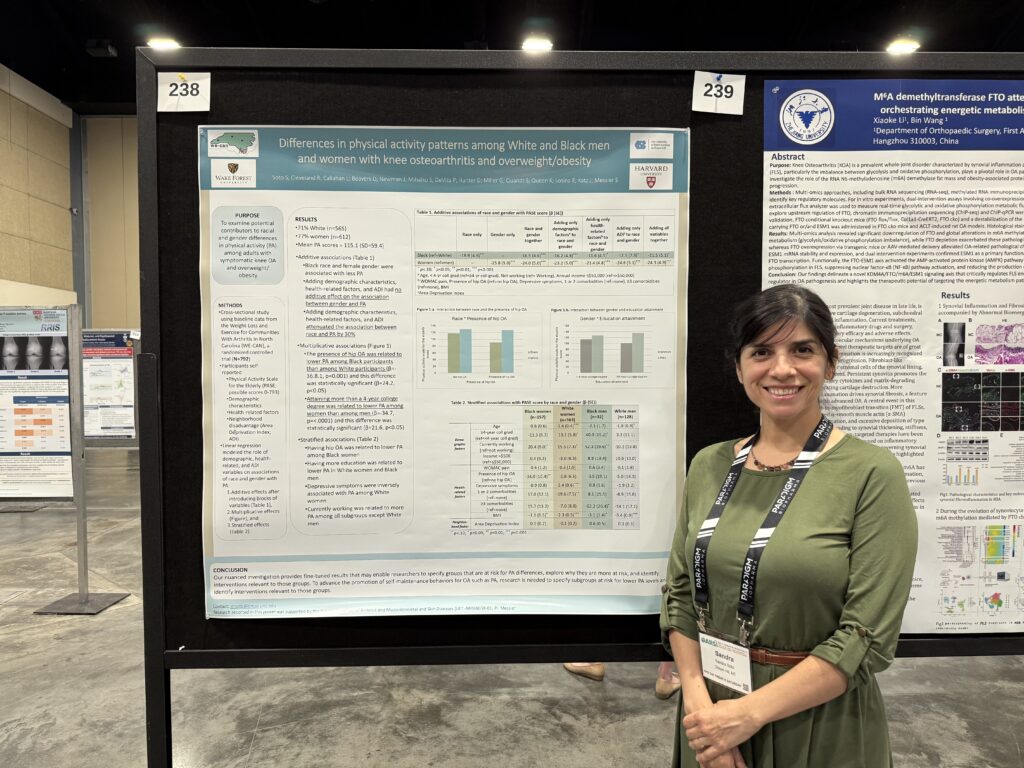
Sandra Soto, PhD, MPH, BSN, presented at the OARSI 2026 World Congress on Osteoarthritis, held April 23–26 in West Palm Beach.
Her presentation, “Differences in physical activity patterns among White and Black men and women with knee osteoarthritis and overweight/obesity,” examined disparities in movement patterns across populations and highlighted important considerations for improving outcomes in osteoarthritis care.
2026 North Carolina Nurses Association Nurse Practitioner Spring Symposium
The UNC School of Nursing had a strong and visible presence at the 2026 North Carolina Nurses Association Nurse Practitioner Spring Symposium, demonstrating leadership in advancing nurse practitioner education, practice and policy across the state.
Eight faculty members served as presenters, including Kandyce Brennan, DNP, CNM, Leigh Mullen, DNP, APRN, FNP-C, Carrie Palmer, DNP, RN, ANP-BC, Leslie Sharpe, DNP, FNP-BC, Tracy Vernon-Platt, DNP, ANP-BC, Rachel McInerney, DNP, FNP-BC, PMHNP-BC, Jean Davison, DNP, FNP-BC, FAA, and Tonya Carter, DNP, MSN, NP-C, sharing expertise on high-impact clinical and educational topics that reflect current practice priorities and emerging evidence.
UNC School of Nursing alumni were also prominently represented. Jennifer Woody (MSN, FNP) delivered the closing keynote, and Juan Powe (MSN, FNP and current PMHNP PGC student) was named Nurse Practitioner Executive Council chair, succeeding Schquthia Peacock (MSN, FNP).
Current students also participated in the symposium, reinforcing the School’s commitment to early professional engagement and leadership development.
Together, the strong presence of faculty, alumni and students highlights Carolina Nursing’s continued impact on the nurse practitioner workforce and its influence on healthcare delivery across North Carolina and beyond.
Media Features
My Experience as a Scholar in Residence
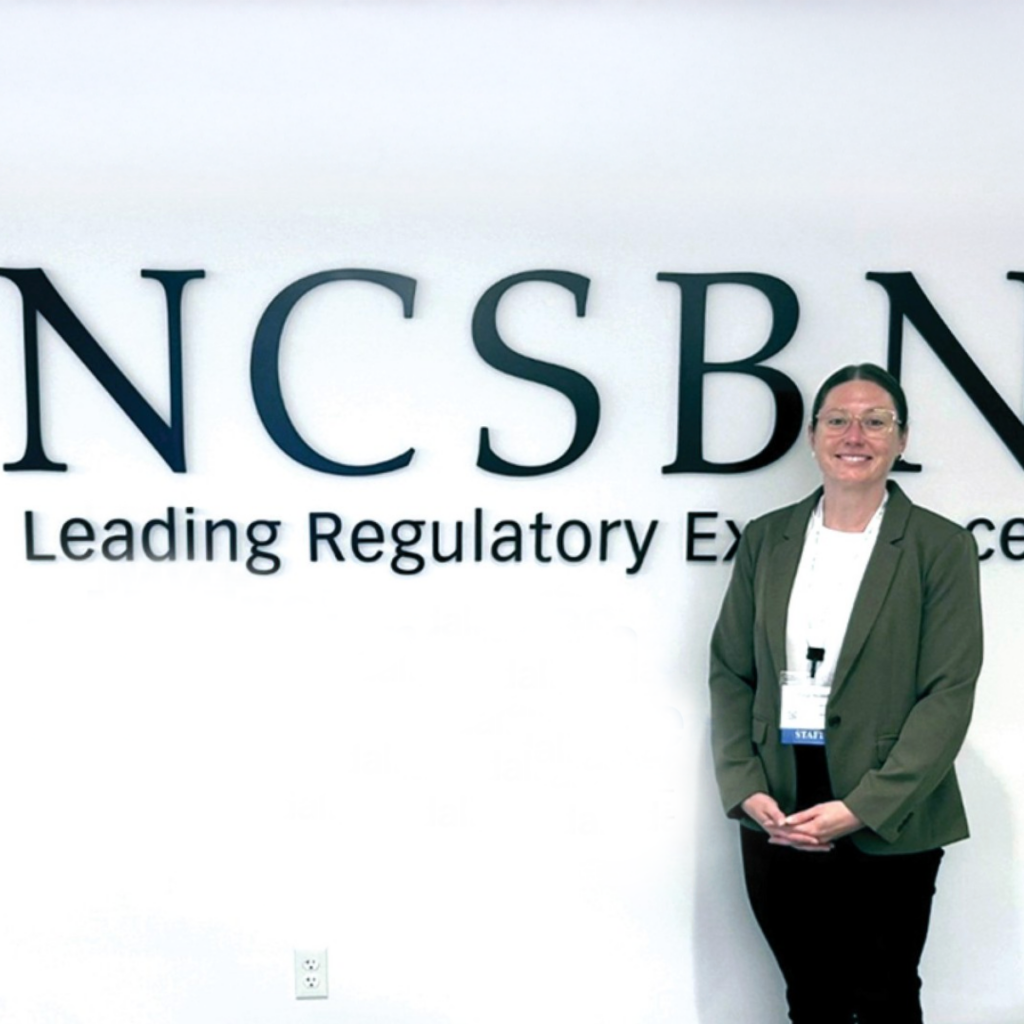
Paige Randall, PhD, MS, RN, CNE, was selected as the 2025 Scholar in Residence by the National Council of State Boards of Nursing.
Randall was drawn to the program after identifying regulatory implications of burnout through her Duke University dissertation on resilience in transitioning nursing students.
During her residency, Randall examined the rising prevalence of burnout and its connection to substance use disorder. Her project highlighted that both practicing nurses and nursing students experience high stress, with many reporting substance use beginning during or before nursing school. Early-career nurses are particularly vulnerable, and burnout and substance use disorder pose risks to patient safety and workforce stability.
Central to Randall’s work is resilience, a protective factor associated with lower burnout and reduced risk of substance use disorder. She identified evidence-based strategies for nurse educators, including realistic preparation for practice, safe reporting environments, integrated wellness activities, confidential peer support groups, flexible learning structures, and early burnout education and screening.