
Publication and presentation roundup — Fall 2025
The latest scholarly work from the UNC School of Nursing
Carolina Nursing faculty, staff, and students are actively sharing their research findings on critical health care topics through publications in academic journals, presentations at national and international conferences, and features in various media outlets, including articles, podcasts, and more.
Take a look at the selection of publications, presentations, and media features below to learn more about how Carolina Nursing experts are advancing health for all by addressing the greatest health care challenges of our time.
Please note that the following list was compiled based on information submitted by our researchers and is categorized into presentations and publications.
Have a publication, presentation, or media feature to share to share? School of Nursing faculty, students and staff can submit information here to be included in the next roundup.
Publications
How limited english proficiency impacts patient engagement with telemedicine: a systematic review
Researchers from the UNC School of Nursing’s Center for Virtual Care Value and Excellence (ViVE), led by Saif Khairat, PhD, MPH, have published a new systematic review in npj Digital Medicine examining how limited English proficiency (LEP) affects patient engagement with telemedicine in the United States.
Drawing on evidence from 17 U.S.-based studies, the review found consistent disparities in telemedicine use among patients with LEP. Compared to English-proficient patients, individuals with LEP were less likely to use telemedicine overall, more likely to rely on in-person visits rather than virtual care, and significantly less likely to participate in video-based visits, often defaulting to telephone encounters. These patterns were observed across ambulatory care settings and multiple clinical specialties.
The authors identified several structural and technological barriers contributing to these disparities, including limited digital literacy, lack of access to video-capable devices or reliable internet, insufficient interpreter availability, and inadequate language-concordant telemedicine platforms. The findings underscore the risk that telemedicine expansion, without intentional design and support, may reinforce rather than reduce existing inequities.
“Telemedicine only advances equity if everyone can use it,” said Khairat. “Our review shows patients with limited English proficiency are less likely to use telemedicine, and especially video visits. The fix is clear: build language into the workflow, not around it, with integrated interpreters, multilingual platforms, and proactive onboarding so care is accessible from the first click.”
The review emphasizes the need for health systems to integrate interpreter services into telemedicine workflows, invest in multilingual and accessible platforms, and strengthen digital support for patients. By addressing these gaps, the authors note, telemedicine can better fulfill its promise as a tool for equitable access to care for linguistically diverse populations.
In a study published in the Journal of Advanced Nursing, Suzanne Thoyre, PhD, RN, FAAN, Kathleen Knafl, PhD, FAAN, and colleagues examined how parents of developmentally at-risk infants define “successful feeding” and how those perceptions change during the first two years of life.
Using a secondary analysis of qualitative responses from a longitudinal mixed-methods study, the team analyzed 864 parent responses collected at 1, 6, 12, 18, and 24 months post-term from families of 254 infants. Parents consistently described feeding success in terms of child behavior, positive responses to feeding, and intake, while time-related concerns, such as eating quickly, became less important as children aged.
Early in infancy, parents often emphasized adequate intake and the absence of adverse responses such as choking or vomiting. Over time, these concerns diminished, giving way to indicators of developmental progress, engagement in eating, and nutritional quality. By later time points, parents increasingly defined success by their child’s emotional and physical well-being rather than the amount of food consumed.
The findings highlight the evolving nature of parental priorities and underscore the importance of family-centered care. By incorporating parents’ definitions of feeding success into clinical guidance, nurses and feeding specialists can better support families of infants with feeding difficulties and align care with what matters most to parents.
In a scoping review, Cheryl Jones, PhD, RN, FAAN, and colleagues examined how faculty onboarding is defined, structured, and evaluated across nursing education. Published in the Journal of Professional Nursing, the review analyzed 23 studies published between 2000 and 2024 to assess the scope, characteristics, and effectiveness of onboarding programs for newly hired nursing faculty.
The authors found substantial variability in onboarding approaches, which commonly included orientation, mentorship, and pedagogical development but differed widely in structure, duration, delivery format, and institutional support. While existing programs were associated with positive outcomes such as increased faculty satisfaction, competency development, retention, and academic achievement, the evidence base was limited by small sample sizes, localized studies, and inconsistent outcome measures.
The review concludes that faculty onboarding programs show promise but require clearer definitions, more consistent implementation, and rigorous evaluation to determine their long-term impact and sustainability. The authors emphasize the need for stronger research and policy guidance to support effective onboarding practices that can strengthen the nursing faculty workforce and address broader challenges related to nurse education and workforce shortages.
Published under collaboration between the UNC Center for the Business of Health at the Kenan-Flagler Business School and the UNC School of Nursing, Drs. Joshua Barrett and Cheryl Jones examine nursing tasks in the context of AI-integrated care delivery. The paper, published in the journal Nursing Outlook, offers a conceptual framework that categorizes nurse-AI interactions.
Through an exploratory review of literature across nursing, organizational theory, information systems, and management, the authors demonstrate that routine nursing tasks are more amenable to automation, while complex cognitive nursing tasks are better suited to augmentation or hybridization, depending on organizational governance structures. This framework provides nurse leaders, educators, and clinicians with practical guidance for aligning AI implementation with care delivery goals, supporting ethical adoption, and preparing nurses for evolving AI-clinical care dynamics.
In a new publication, Isabel Roth, DrPH, MS, and colleagues from the MAGIC Lab (More Access to Group Integrative Care) explored how primary care teams measure outcomes for patients with chronic pain who participate in Integrative Group Medical Visits (IGMV). Their findings point to a clear gap between how pain is experienced and how it is often assessed in clinical settings.
The study drew on qualitative interviews with clinicians, administrators, and staff across safety-net clinics and hospitals in six states. While sites used a wide range of outcome measures, the researchers found no consistent approach that fully captured the biopsychosocial changes patients experience through IGMV, such as improved social support, confidence in managing pain, self-management behaviors, and physical function.
The authors conclude that chronic pain care needs better tools. Specifically, tools that reflect the full, lived experience of patients and align with how integrative group care actually works in practice. As Dr. Roth explained, “Chronic conditions are complex, and our assessments of how patients are doing should reflect that complexity.”
The study contributes to a growing conversation about patient-centered, actionable measurement in chronic pain care and underscores the need for outcome tools designed specifically for integrative, team-based approaches.
Strategies to Improve Sustainability of Nursing School Simulation Labs: A Scoping Review
Dr. Julie Jacobson Vann, Jamie Conklin, and Dr. Adrienne Wald, Associate Professor at Mercy University School of Nursing in New York, completed and published a scoping review on strategies to “green” school of nursing simulation labs. The paper, “Strategies to Improve Sustainability of Nursing School Simulation Labs: A Scoping Review,” was published in the journal Clinical Simulation in Nursing in December 2025.
School of nursing (SON) simulation labs generate waste and pollution that harm the health of populations and the planet. The purpose of this scoping review was to identify and summarize strategies to green SON simulation labs and related cost savings and educate nursing students about these strategies. We conducted a scoping review and reported our work using the Preferred Reporting Items for Systematic Reviews and Meta-Analyses for Scoping Reviews (PRISMA-ScR). Eleven sources were included. Identified themes were recycling, reusing and reprocessing, reducing use, sustainable supply disposal, environmentally preferred procurement, and educational initiatives. This scoping review revealed the gaps in published literature and the need for comprehensive guidelines to green nursing simulation labs.
A recent publication by Carrie Palmer, DNP, RN, ANP-BC, and colleagues highlights the effectiveness of implementing an evidence-based HIV risk screening tool in a rural North Carolina health department. Over a 12-week period, nurse practitioners screened 245 patients aged 15–65, identifying 52% as at risk for HIV acquisition. Of those identified, 73% accepted preexposure prophylaxis (PrEP) services. This NP-led quality improvement project improved referrals for PrEP, enhanced patient outcomes, and demonstrated the feasibility of expanding HIV prevention efforts in rural and resource-limited settings.
A new publication led by Rachel Hirschey, PhD, RN, FAAN, describes the protocol for the Physical Activity Centers Empowerment (PACE) Study, a community-engaged feasibility randomized controlled trial designed to increase physical activity among Black individuals with colorectal cancer.
Published in JMIR Research Protocols, the paper outlines a partnership-driven approach to developing culturally tailored physical activity programs. The study aims to help cancer survivors become more active and to strengthen supportive care for all individuals living with colorectal cancer.
“Our goal is to make survivorship care more accessible and relevant by meeting people where they are,” said Dr. Rachel Hirschey. “Community-engaged research allows us to listen, learn, and build programs that reflect the strengths and needs of diverse cancer survivors.”
The project has brought together a talented team from the School of Nursing, including Jingle Xu, BSN, MS, MSN; Ashley Leak Bryant, PhD, RN, OCN, FAAN; Tammy Triglianos, DNP, ANP-BC, AOCNP; Natasha Renee Burse, MS, DrPH; and Jennifer Leeman, DrPH, MPH, MDiV, reflecting the School’s strong leadership in oncology nursing research, survivorship care, and community engagement.
Reframing Latent Tuberculosis Infection Screening and Treatment as a Primary Care Responsibility
Rachel McInerney, DNP, FNP-BC, PMHNP- BC, recently published an article in The Journal of Nurse Practitioners urging primary care providers to take a greater role in screening and treating latent tuberculosis infection (LTBI). Although U.S. tuberculosis rates declined for decades, incidence has now risen for three consecutive years, with an estimated 13 million Americans living with LTBI.
Traditionally managed by public health departments, LTBI care is increasingly limited by staffing shortages and competing priorities. As a result, many at-risk individuals are not identified until they develop active TB. Dr. McInerney emphasizes that nurse practitioners and other primary care clinicians are well-positioned to bridge this gap by incorporating LTBI screening into routine visits, identifying at-risk patients, and supporting treatment adherence.
Her article highlights key screening methods, evidence-based treatment regimens, and patient-centered approaches to improve outcomes. She also calls for system-level strategies such as provider training, electronic health record prompts, and supportive policies.
By embedding LTBI care into primary care practice, clinicians can advance the World Health Organization’s End TB Strategy and help eliminate TB as a public health threat. This work reflects the School of Nursing’s leadership in addressing pressing public health challenges through innovation in clinical practice.
Leslie Davis, PhD, RN, ANP-BC, FAAN, FAANP, FACC, FAHA, FPCNA, co-authored a newly released American College of Cardiology/American Heart Association (ACC/AHA) report outlining the core principles and processes that guide the development of all ACC/AHA clinical practice guidelines.
This comprehensive document provides an updated framework for how multidisciplinary teams—composed of clinicians, nurses, pharmacists, and patient representatives—create evidence-based recommendations that improve cardiovascular care.
The report details the methodology, transparency standards, and patient-centered focus underpinning ACC/AHA guidelines, including the rigorous process used to classify recommendations and evaluate the strength of evidence. It also highlights the importance of shared decision-making, patient education, and social determinants of health in improving outcomes for individuals with cardiovascular disease.
Isabel Roth, DrPH, MS, co-authored a national call to action urging continued federal support for the National Center for Complementary and Integrative Health (NCCIH)—the primary NIH institute advancing evidence-based research in integrative, complementary, and traditional health practices.
The Viewpoint article was written in response to a proposal to eliminate the NCCIH in the President’s Fiscal Year 2026 budget. The authors outline how NCCIH has been essential to advancing whole-person health research, supporting rural and underserved communities, and training the next generation of complementary and integrative health researchers.
The piece calls on Congress and the broader research community to reaffirm and strengthen support for NCCIH, noting that dismantling it would jeopardize decades of progress in health equity, innovation, and patient-centered care.
Human Factors Evaluation of the Use of Workarounds Among Obstetric Nurses
Samantha Bernstein, PhD, RN, FAWHONN, principal investigator of the Human Factors in Nursing Lab, has published new research examining why nurses in obstetric settings rely on “workarounds” and what those behaviors reveal about system design and patient safety. Funded by the Association of Women’s Health, Obstetric, and Neonatal Nurses, this project is the first to study workarounds from the nursing perspective.
Using a mixed-methods approach grounded in the Systems Engineering Initiative for Patient Safety (SEIPS) model, the study identified key components of the work system that contribute to workaround behaviors. Most were linked to technology and tools—such as medication cabinets, electronic health records, and smart pumps—where nurses adapted workflows to ensure timely, safe patient care.
Findings highlight that nurses’ workarounds are often adaptive responses to operational failures, not noncompliance. The authors emphasize that system-level improvements can reduce the need for workarounds and strengthen patient safety in obstetric care.
First-semester nursing students often struggle to connect health assessment and skills lab content with clinical expectations. To bridge this gap, we implemented structured entry and exit tickets in labs, guided by the Transparency in Learning and Teaching (TILT) framework and Bloom’s higher-order thinking skills. This approach, developed by Krystal Pendergraft-Horne, DNP, RN, and Cory Smith, BS, was published in Nurse Educator and highlights an evidence-based strategy to enhance clinical readiness.
Entry tickets, submitted three days before the assigned lab, ensured students arrived prepared to engage. Assignments included audiovisual reviews, reflective prompts, mock assessment critiques, and visual tools (e.g., checklists) to reinforce key systems and skills content. These activities helped students come to lab ready to practice with empathy and intentionality. For example, one prompt asked students to imagine “a day in the life” of someone living with an ostomy or portable oxygen—encouraging them to consider the lived experience behind clinical presentations.
Inclusive language was emphasized, particularly in skin, hair, and nail assessments, where students described their own skin using culturally responsive terms. This prepared them to conduct assessments that were not only clinically accurate but also inclusive and patient-centered. Exit tickets emphasized clinical integration. Students partnered to perform full assessments and then documented findings in an academic electronic health record (EHR), reinforcing sequencing, professional language, and documentation fluency.
Faculty observed stronger student engagement, fewer preparation gaps, and increased time for deliberate practice. Students reported greater confidence in applying skills, documenting in the EHR, and entering clinical with readiness. This structured strategy enhanced lab preparedness and laid a foundation for inclusive, competent care.
Chatbots in Sexual and Reproductive Health: Expanding Access and Equity
Chatbots are emerging as valuable tools in healthcare, particularly within sexual and reproductive health (SRH). With the integration of artificial intelligence, these platforms hold significant potential to enhance access to health education and services, especially in rural and underserved communities.
In this commentary, Kandyce Brennan, DNP, CNM, synthesizes existing literature on SRH chatbots, examining their development, functionality, and effectiveness. Evidence indicates that chatbots can improve health literacy by providing immediate, evidence-based, and personalized information tailored to individual needs. By supporting informed decision-making, they have the capacity to democratize access to essential health knowledge and promote health equity across diverse populations.
Several factors influence their impact, including technological literacy, socio-cultural context, and concerns regarding ethics and privacy. While chatbots can enable healthcare providers to focus on more complex cases, it is critical that their content undergo rigorous validation, that interactions are developed equitably, and that strong measures are in place to ensure data privacy and security.
Overall, Dr. Brennan concludes that chatbots represent a promising innovation in SRH. To maximize their public health benefits, future development must prioritize accessibility, inclusivity, and trust, ensuring that these tools expand healthcare access while advancing equity in sexual and reproductive health outcomes.
Ashley Leak Bryant, PhD, RN, OCN, FAAN, coauthored a study published in Oncology Nursing Forum exploring the factors that influence advanced practice providers’ decisions to remain in oncology. The article, “Intrinsic Factors as to Why Advanced Practice Providers Stay in Oncology”, sheds light on the motivations that help sustain the oncology workforce and support continuity of care for patients with cancer.
A study coauthored by Victoria Crowder, RN, BSN, Todd Schwartz, DrPH, and Ashley Leak Bryant, PhD, RN, OCN, FAAN, was published in Oncology Nursing Forum. The article, “Physical Function and Mobility in Older Adults Receiving Treatment for Acute Myeloid Leukemia: A Longitudinal Qualitative Study”, explores the lived experiences of older adults with acute myeloid leukemia (AML) as they undergo treatment.
Through longitudinal interviews with patients aged 60 and older, the team identified themes of reduced mobility, fluctuating energy levels, and eventual adaptation to changing physical abilities. The findings highlight the importance of nursing interventions and tailored referrals to support mobility and functional needs throughout treatment.
Intrinsic Factors as to Why Advanced Practice Providers Stay in Oncology
An article coauthored by Victoria Crowder, PhD, RN, Jamie Conklin, MLIS, Loridna A. Coombs, PhD, RN, Todd Schwartz, DrPH, and Ashley Leak Bryant, PhD, RN, OCN, FAAN, has been published in the Journal of the Academy of Nutrition and Dietetics. The scoping review, “Nutrition and Acute Myeloid Leukemia and Myelodysplastic Syndromes in Older Adults (≥60): A Scoping Review,” examines the complex role of nutrition in supporting older adults diagnosed with acute myeloid leukemia (AML) and myelodysplastic syndromes (MDS).
The review synthesizes existing evidence on nutritional challenges and interventions for this population, underscoring the importance of addressing diet and nutritional needs as part of comprehensive cancer care. By identifying gaps in the literature, the study points to future directions for research and clinical practice that can help improve treatment outcomes and quality of life for older adults with AML and MDS.
Presentations
2025 AACN Transform Conference
- Podium Presentation – “Partnering to Encourage Others During Loss – An End-of-Life IPEP Activity” Presented by Drs. Barroso and Stanek
- Podium Presentation: “Enhancing Nursing Students’ Confidence and Connectedness Through AI-Driven Communication Coaching” – Presented by Drs. Baker and Raphael-Grimm.
- Poster Presentation: “Let Them Choose: Advancing Belonging Through HyFlex Learning in an Undergraduate Nursing Course” – Presented Dr. Maureen Baker and Cory Smith.
- Podium Presentation-“Zero to 40: A Rapid Increase in Simulation to Enhance Competence and Practice-Ready Nurses.” Presented by Drs. Apple and Pendergraft-Horne
- Podium Presentation-“Digital Natives to Digital Nurse Leaders: Transforming Social Media Competency Across Nursing Curricula” Presented by Drs. Brennan and Thompson
American Heart Association Scientific Session and Resuscitation Science Symposium
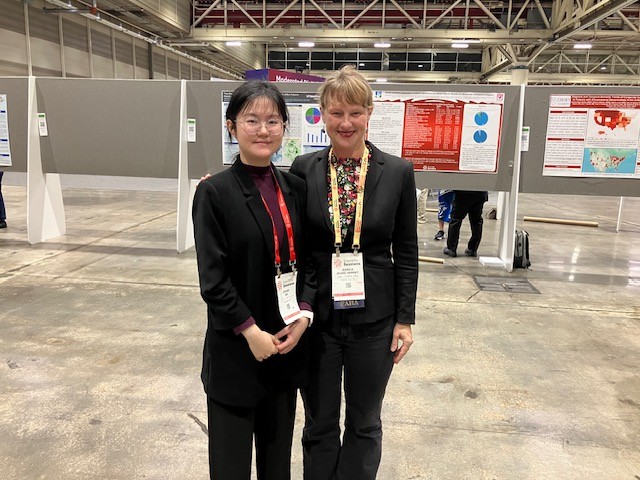
Jessica Zègre-Hemsey, PhD, RN, FAHA, and PhD student Ziyuan Shi attended the American Heart Association Scientific Sessions and Resuscitation Science Symposium conference held in New Orleans, LA. They were joined by Dr. Leslie Davis from the UNC School of Nursing.
Dr. Zègre-Hemsey and her team, which includes SON faculty member Dr. Jamie Crandell, had five abstracts accepted for presentation at this year’s conference. Among the work presented was the study, “Patients Hospitalized for Acute Coronary Syndrome Can Self-Acquire an Electrocardiogram for Early Disease Detection and Response,” which was funded by a SON Dean’s Pilot Award. Abstracts from the team were published in Circulation.
“The opportunity to disseminate our research, network and engage with leaders across cardiac care is a privilege,” said Dr. Zègre-Hemsey.
Diagnostic journeys in myeloma: a qualitative exploration of barriers and facilitators
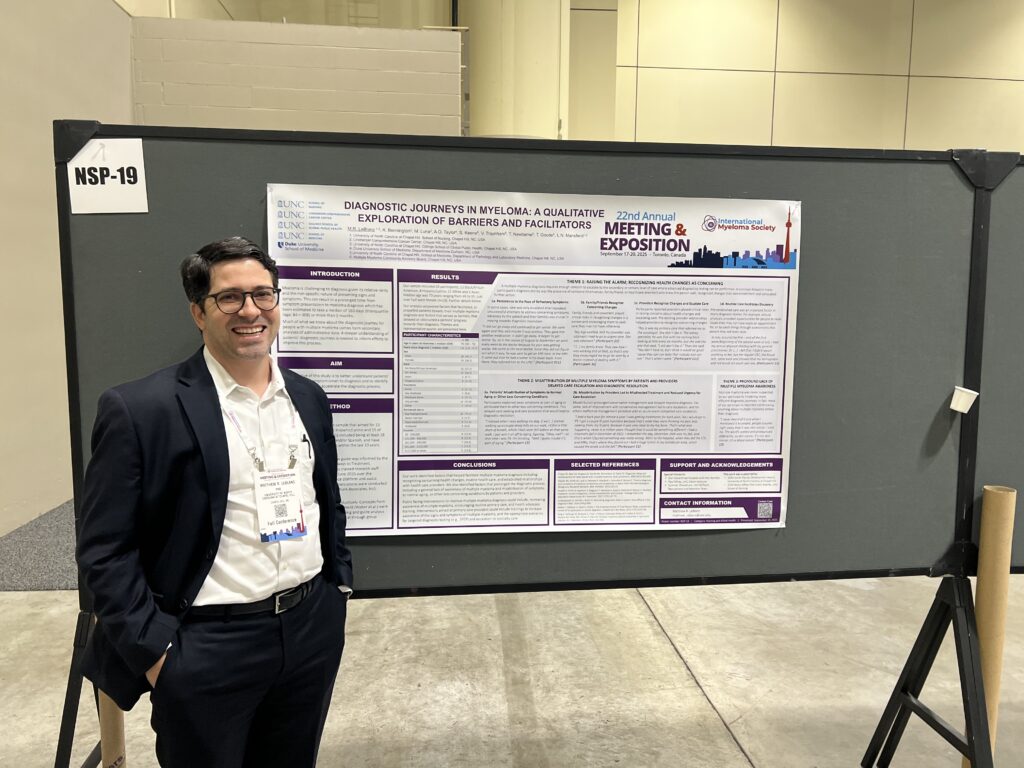
Work by UNC School of Nursing faculty Matthew LeBlanc, PhD, RN, Lisa Mansfield, PhD RN, and Susana Barroso, PhD, RN, was recently recognized by Myeloma UK in their summary of impactful research from the International Myeloma Society Annual Meeting in Toronto.
Their study, “Diagnostic journeys in myeloma: a qualitative exploration of barriers and facilitators,” examined the experiences of 35 myeloma patients to better understand factors that delay or support timely diagnosis. Because multiple myeloma often presents with nonspecific symptoms such as pain or fatigue, patients face an average delay of more than five months between symptom onset and diagnosis.
A Multi-Level Intervention using Learning and Education (MILE) to Improve Chlorhexidine Gluconate Use and Reduce Central Line-Associated Bloodstream Infections
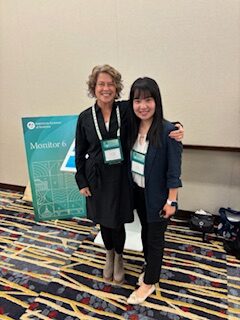
Mika Kuroki, DNP, AGNP-C, OCN, presented her quality improvement project, ‘A Multi-Level Intervention using Learning and Education (MILE) to Improve Chlorhexidine Gluconate Use and Reduce Central Line-Associated Bloodstream Infections’ at the American Academy of Nursing Health Policy Conference in Washington, DC on Friday, October 17.
Dr. Kuroki’s QI project evaluated an educational intervention for both Registered Nurses and hospitalized patients on the NC Basnight Bone Marrow Transplant Unit. The intervention resulted in a 60% reduction of ClABSI incidence over the two months following the intervention.
Pictured with Dr. Kuroki is Dr. Lorinda Coombs, her committee chair. In addition to Dr. Coombs, Dr. Ashley Leak Bryant and Dr. Vernon Platt from the UNC School of Nursing were also on her committee, as well as Dr. Paul Armistead, Nurse manager Massey Wasserman and fellow DNP graduate, Dr. Abigail Short.
Interdependent Associations between Perceived Threat and Mediterranean Diet Adherence among Prostate Cancer Survivors and Their Partners
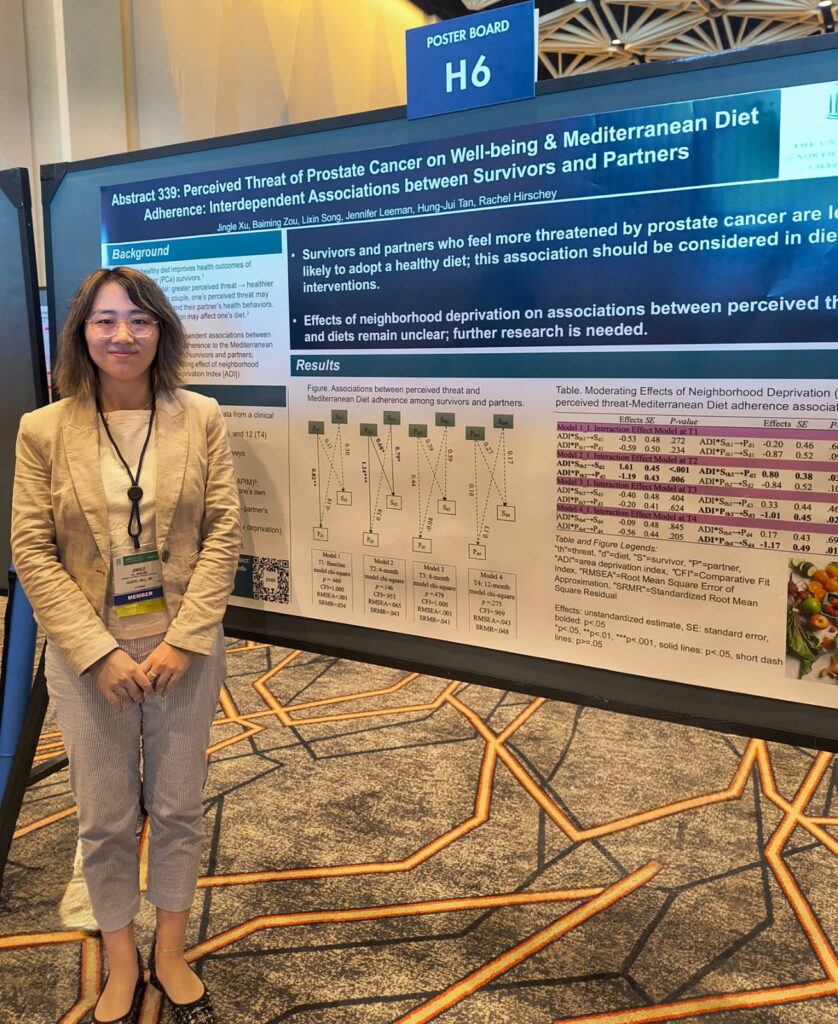
PhD Candidate Jingle Xu was selected to present her dissertation research at the 2025 ASCO Quality Care Symposium, a national interdisciplinary meeting dedicated to advancing equitable, patient-centered cancer care. Her abstract, titled “Interdependent Associations between Perceived Threat and Mediterranean Diet Adherence among Prostate Cancer Survivors and Their Partners,” examines how survivors’ and partners’ perceptions of illness threat influence both their own and each other’s dietary behaviors over time.
Xu’s research draws on the Health Belief Model and uses sophisticated Actor-Partner Interdependence Modeling (APIM) to explore how perceived threat and neighborhood socioeconomic deprivation intersect to shape diet adherence. Findings suggest that greater emotional distress following prostate cancer treatment may actually hinder healthy eating, particularly among couples living in socioeconomically deprived neighborhoods. These insights have important implications for designing couple-based dietary and survivorship interventions that address both psychological and environmental barriers to healthy behaviors.
“Jingle’s work is of truly exceptional quality,” said Dr. Rachel Hirschey, faculty mentor. “She represented our School beautifully at this national interdisciplinary meeting, contributing important insights into how emotional and environmental factors shape healthy behaviors among cancer survivors and their families.”
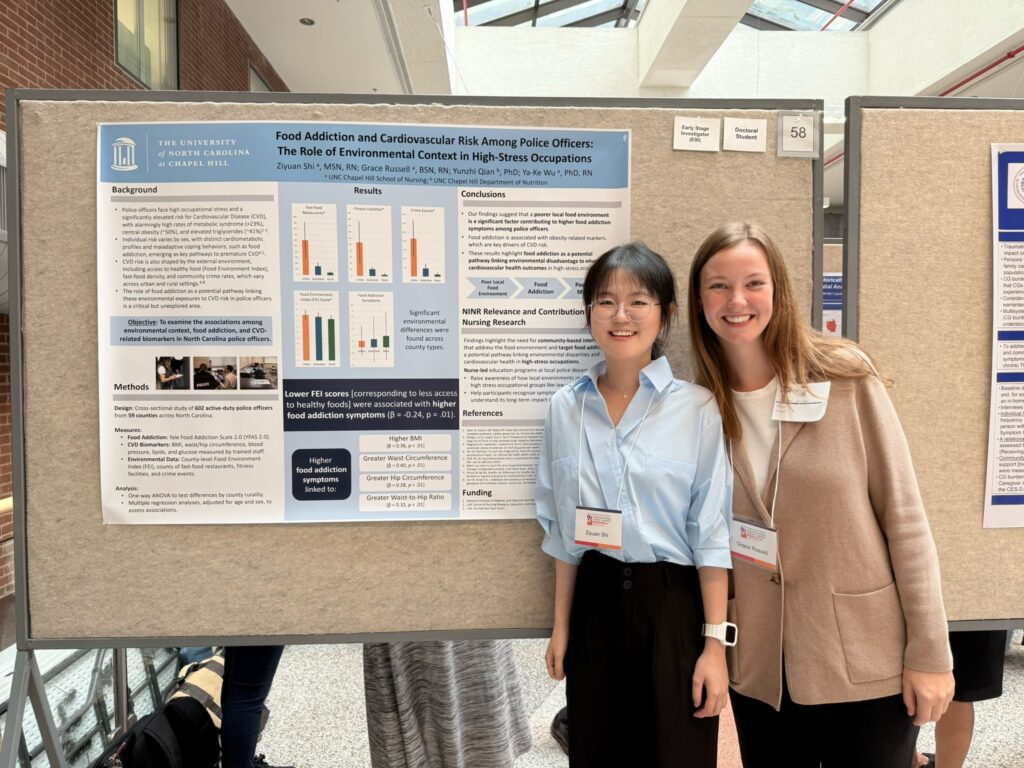
Food Addiction and Cardiovascular Risk Among Police Officers: The Role of Environmental Context in High-Stress Occupations
Two nursing PhD students from the University of North Carolina at Chapel Hill School of Nursing, Ziyuan Shi, MSN, RN, and Grace E. Russell, BSN, RN, presented their research at the National Institute of Nursing Research’s (NINR) 40th Anniversary Scientific Symposium on September 17, 2025, at the National Institutes of Health campus in Bethesda, Maryland.
Their study, “Food Addiction and Cardiovascular Risk Among Police Officers: The Role of Environmental Context in High-Stress Occupations,” examined the intersection of food environments, eating behaviors, and cardiovascular health among law enforcement officers, a workforce uniquely vulnerable to chronic disease due to the demands and stressors of their profession.
The project was conducted under the mentorship of Dr. Grace Wu, Assistant Professor at the UNC School of Nursing, and in collaboration with Dr. Yunzhi Qian, a UNC alumna and nutrition scientist. Together, the team analyzed data from The Carolina Blue Project, which included more than 600 police officers across 59 North Carolina counties, to investigate associations among food addiction, cardiovascular biomarkers, and county-level factors such as food access, fast-food density, and crime rates.
Key findings showed that officers in counties with poorer food environments reported more symptoms of food addiction, which were in turn linked to higher body mass index, waist and hip circumferences, and a higher waist-to-hip ratio, all important predictors of cardiovascular disease. The results underscore the need to address not only individual health behaviors but also structural and community-level factors in promoting officer wellness.
“This research emphasizes the importance of considering environmental disadvantage and occupational stress in understanding eating behaviors and cardiovascular health,” said Dr. Wu. “Community-based interventions that improve local food environments may offer a pathway to better health for law enforcement officers and the communities they serve.”
Hybrid Teaching: Improving Digital Competence in Nursing and Midwifery Educators
Kandyce Brennan, DNP, CNM, was recently invited to speak to nurse faculty and clinical educators as part of the Pan American Health Organization’s (PAHO) course, Improving the Competencies of Nursing and Midwifery Faculty for Hybrid Teaching and Clinical Training.
In a live session titled Hybrid Teaching: Improving Digital Competence in Nursing and Midwifery Educators, Dr. Brennan presented on strategies and technologies used at the UNC School of Nursing to strengthen hybrid and distance learning. She also highlighted the work of EdTech Supervisor & Data Analyst Cory Smith, showcasing innovative uses of technology to enhance hybrid and distance learning.
“Dr. Kandyce Brennan’s lecture during the opening session of the course was truly outstanding. Dr. Brennan’s expertise, clarity, and ability to connect theory with practical implications for nursing education greatly enriched the learning experience of our participants. Her contribution was also warmly received by the audience of nursing and midwifery educators throughout the Caribbean.” – Bruna Moreno Dias, PhD, RN, International Consultant, Department of Health Systems and Services